


The Human Rights Foundation (HRF) has emerged as one of the most influential organizations championing Bitcoin as a tool for human rights and freedom.
Under the leadership of Chief Strategy Officer Alex Gladstein, HRF has transformed how the global community understands Bitcoin's role beyond speculation and investment positioning it as essential infrastructure for financial freedom in authoritarian regimes.
About the Human Rights Foundation
The Human Rights Foundation is a nonpartisan, nonprofit 501(c)(3) organization founded in 2005 that promotes and protects human rights globally, with a particular focus on closed societies and authoritarian regimes. Based in New York, HRF works to connect dissidents, civil society groups, and activists with business leaders, technologists, journalists, philanthropists, policymakers, and artists to promote free and open societies worldwide.
For these billions of people, traditional financial systems often serve as instruments of control, surveillance, and repression rather than tools of empowerment.
Alex Gladstein and the Bitcoin-Human Rights Connection
Alex Gladstein serves as Chief Strategy Officer at HRF and has been Vice President of Strategy for the Oslo Freedom Forum since its inception in 2009. He has become the preeminent advocate for Bitcoin as a tool for human rights activists worldwide to fight back against censorship and government oppression.

Gladstein's influential writings have appeared in major publications including The Atlantic, BBC, CNN, The Guardian, Foreign Policy, The New York Times, NPR, TIME, The Washington Post, WIRED, and The Wall Street Journal. He co-authored "The Little Bitcoin Book" in 2019 and published "Check Your Financial Privilege" to explore how Bitcoin can address global financial inequality.
In his groundbreaking essay "Why Bitcoin Matters for Freedom" and more recently "Why Bitcoin is Freedom Money" published in the Journal of Democracy (October 2025), Gladstein articulates how Bitcoin serves two critical functions for people under oppressive regimes:
 Mary Kate Godfrey
- An accessible and equitable savings technology that protects wealth from hyperinflation and currency debasement
- A censorship-resistant medium of exchange that enables transactions when traditional banking systems are weaponized against dissidents
As Gladstein has stated, "Bitcoin is bad for dictators" because it fundamentally disrupts authoritarian control over money and identity, offering citizens an escape route from financial surveillance and repression.
HRF's First Bitcoin Experience: Ukraine 2013
The Human Rights Foundation's journey with Bitcoin began during Ukraine's Euromaidan protests in 2013-2014, when pro-democracy protesters defied Viktor Yanukovych's authoritarian regime. When protesters faced frozen bank accounts and could not fund their resistance through traditional channels, they turned to Bitcoin.
"It was very early in bitcoin's lifecycle; bitcoin was worth about a hundred dollars back then; we were very skeptical about its effectiveness," Gladstein recalled. But Bitcoin fulfilled a critical role—it allowed activists to "send value where traditional money could no longer circulate."
This firsthand experience convinced HRF that Bitcoin could bypass locked banking systems and offer a financial lifeline to oppressed activists worldwide. Since then, the organization has supported numerous movements globally by relying on this resilient technology.
The Bitcoin Development Fund
In 2020, HRF launched its Bitcoin Development Fund (BDF), which has become one of the most significant sources of support for open-source Bitcoin development and education worldwide. The fund focuses on three primary areas:
1. Software Development
Supporting developers who enhance Bitcoin's privacy, security, and decentralization. This includes funding for:
- Bitcoin Core developers
- Lightning Network improvements
- Privacy technologies like CoinJoin implementations
- Mining decentralization tools
- Self-custody solutions
2. Education and Community Building
Creating resources and programs that help people in authoritarian regimes understand and safely use Bitcoin, including:
- Educational content in multiple languages
- Bitcoin meetups and communities in repressive environments
- Training programs for activists and journalists
- Merchant adoption initiatives in developing nations
3. Human Rights Defenders
Direct support for activists, nonprofits, and journalists using Bitcoin to counteract financial surveillance, censorship, confiscation, and financial repression.
Impact and Scale
Since its inception in 2020, the Bitcoin Development Fund has achieved remarkable impact:
- Over $8.5 million distributed in Bitcoin and USD grants
- Nearly 300 projects funded across 62 countries
- Focus regions: Africa, Latin America, Middle East, Asia, and authoritarian regimes worldwide
Recent Grant Highlights
The fund operates on a quarterly basis, with recent rounds including:
Q1 2025 (1 billion satoshis / ~$800,000):
- African Bitcoin Institute (Rwanda)
- Bitcoin Babies (Kenya) - focusing on financial literacy and nutrition education
- Bitsacco (Kenya) - Bitcoin-based savings and credit cooperative
- The Core (Kenya) - hands-on Bitcoin self-custody training
- NetBlocks - monitoring internet shutdowns in authoritarian regimes
- BTCPay Server - censorship-resistant payment processing
Previous Major Grants:
- $100,000 to BTCPay for uncensorable payment processing
- $100,000 to Calvin Kim for Utreexo Bitcoin scaling research
- $50,000 to Jon Atack for Bitcoin Core development
- $50,000 to Vinteum for Latin American Bitcoin education
- $25,000 to Bitcoin Ekasi (South Africa) for circular Bitcoin economy development
- Multiple grants to privacy tools like Samourai Wallet, Robosats, and Harbor
The Oslo Freedom Forum
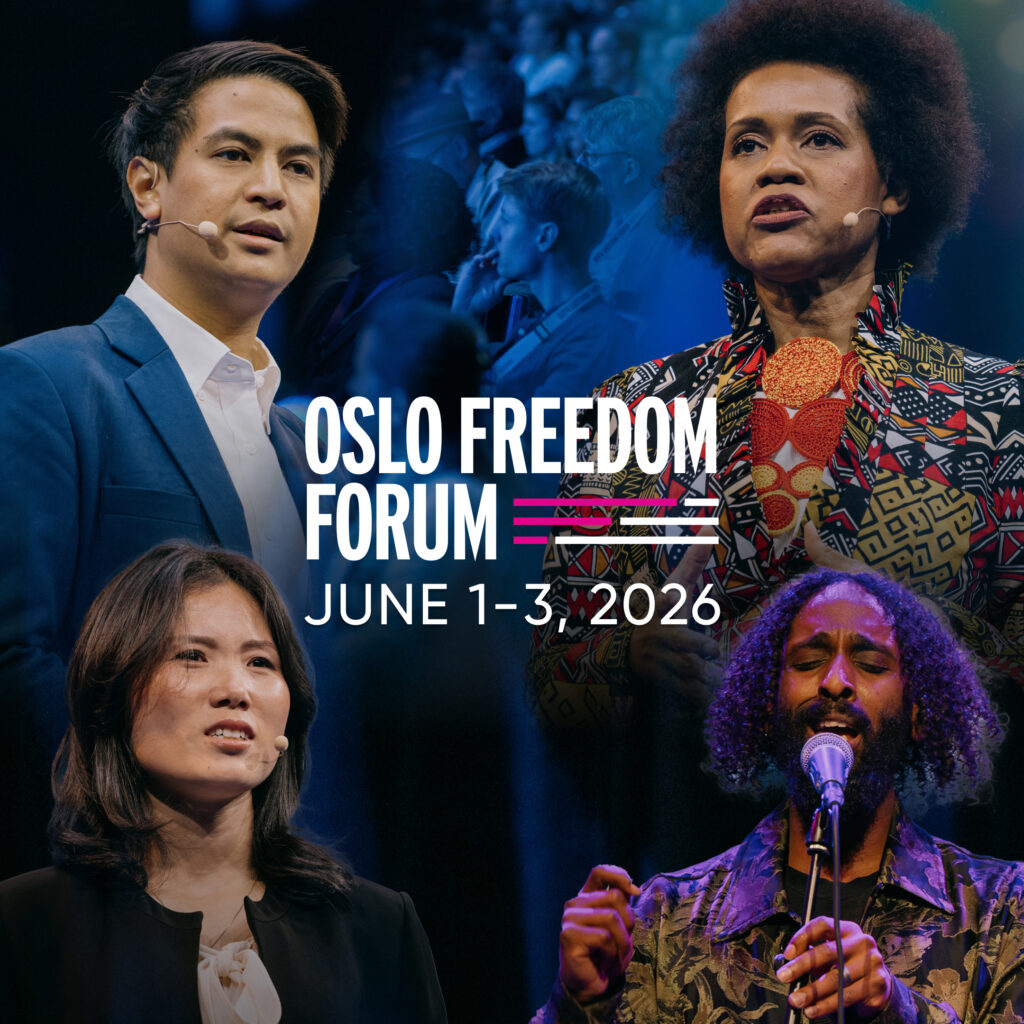
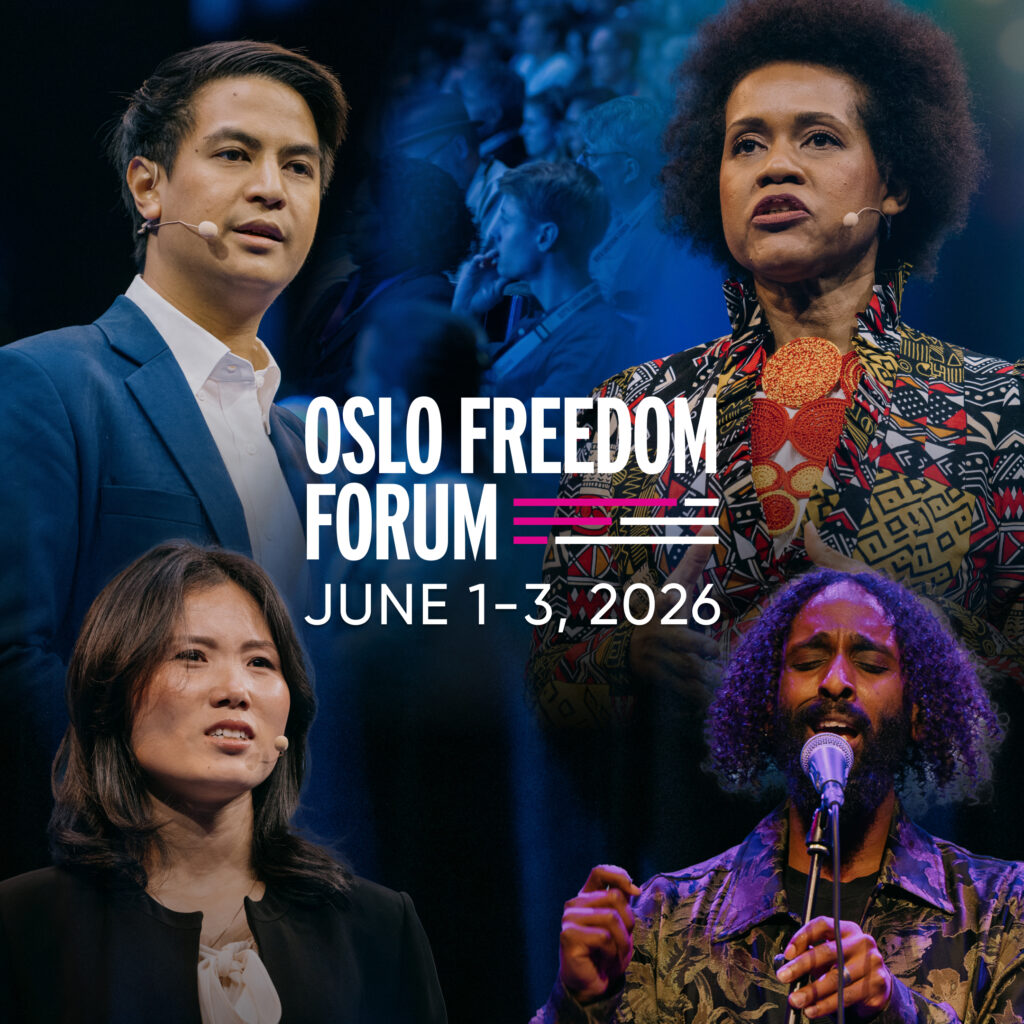
The Oslo Freedom Forum (OFF) has become HRF's flagship event for promoting the intersection of human rights and freedom technology. Founded in 2009, the annual conference brings together thousands of activists, civil society leaders, scholars, artists, technologists, business leaders, and journalists to exchange strategies and inspire one another in the fight for liberty and democracy.

The Financial Freedom Track
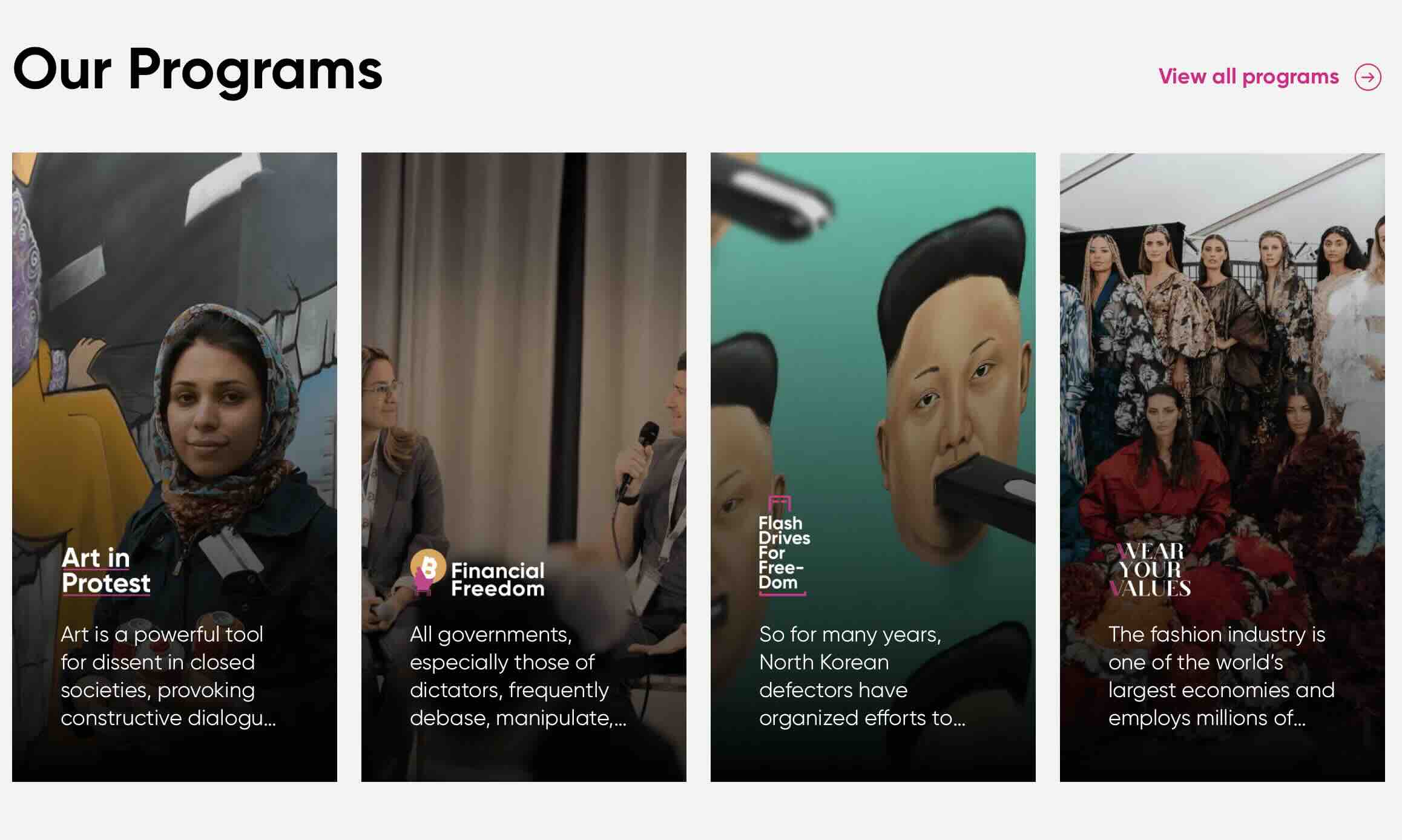
Since 2018, the Oslo Freedom Forum has featured a dedicated Financial Freedom Track (now evolved into the broader Freedom Tech Track), which explores how authoritarian regimes deploy financial repression and how citizens fight back with open-source software, particularly Bitcoin.
The track has featured prominent Bitcoin advocates including:
- Lyn Alden
- Elizabeth Stark (Lightning Labs)
- Jack Dorsey (Block)
- Matt Odell
- Nic Carter
- Jeff Booth ( Author of The Price of Tomorrow)
- Craig Raw (Sparrow Wallet)
- And dozens of activists using Bitcoin on the ground
Bitcoin Academy for Activists
As part of the Oslo Freedom Forum, HRF runs Bitcoin 101 for Activists workshops, covering the basics of using Bitcoin safely and effectively for nonprofit leaders. These hands-on sessions teach participants how to:
- Install and use self-custodial wallets
- Secure their funds from confiscation
- Fundraise with cryptocurrency
- Protect their privacy when transacting
- Run Bitcoin nodes
- Use Lightning Network for payments
The 2025 Oslo Freedom Forum (May 26-28) continues this tradition with its Freedom Tech Track, featuring spyware fighters, Bitcoin advocates, Nostr developers, and privacy defenders sharing cutting-edge developments that help dissidents and journalists stay safe online.
Real-World Impact Stories
HRF's work has enabled Bitcoin adoption in some of the world's most challenging environments:
Venezuela
Venezuelan refugees facing hyperinflation that topped 1 million percent have used Bitcoin to preserve wealth and receive remittances. The regime's strict financial controls that extract up to 56% in fees from wire transfers have pushed families to Bitcoin, where they can receive funds in minutes with minimal fees, avoiding government censorship.
Nigeria
Activists in Nigeria use Bitcoin to circumvent financial censorship and receive international donations when their bank accounts are frozen by authoritarian governments.
Russia
Following Putin's invasion of Ukraine, Russian dissidents and independent media like Novaya Gazeta Europe have relied on Bitcoin donations to continue operations when traditional funding channels were cut off.
Cuba
Cuban citizens living under one of the world's most restrictive financial systems use Bitcoin to access global markets and preserve savings against currency debasement.
South Africa
Bitcoin Ekasi, a township project in South Africa, has created a circular Bitcoin economy where community members can save for the first time in their lives. As community leader Luthando Ndabambi explains, "Before Bitcoin I could not really see a true way of getting financial freedom... I tell people in my township, 'When you think about Bitcoin, think about saving for your kids.'"
Uganda
Refugees in Uganda who cannot open bank accounts because they lack citizenship documents use Bitcoin as their only access to financial services, as highlighted by Noble Nyangoma, CEO of the Bitcoin Innovation Hub.
Somalia
Through the Groundswell Project, Somali women have learned to use Bitcoin to fundraise for political campaigns for female political candidates, bypassing traditional financial barriers.
Why Bitcoin Matters for Human Rights
HRF's Alex Gladstein has articulated that the conversation about Bitcoin is fundamentally different depending on where you're born:
For those born into reserve currencies (dollar, euro, yen, pound), Bitcoin might seem like a speculative investment or an interesting technology.
For those born into authoritarian regimes or weak currencies (the other 89% of the global population), Bitcoin represents:
- Protection against hyperinflation and currency debasement
- Freedom from financial surveillance and censorship
- Ability to receive international donations
- Censorship-resistant fundraising for activism
- Secure storage of wealth that governments cannot confiscate
- Access to global markets without permission
- A way to escape with your life savings (via memorized seed phrases)
As the technology has matured over its 15+ years of existence, Bitcoin has become significantly more practical for human rights work. It's more liquid, easier to use, offers better privacy tools, and has more robust infrastructure than in its early days.
The Broader Freedom Tech Vision
While Bitcoin remains central to HRF's financial freedom work, the organization has expanded its focus to encompass a broader range of freedom technologies:
- Encrypted communications - Supporting tools that allow dissidents to communicate securely
- Decentralized social media - Backing protocols like Nostr that resist censorship
- Privacy-preserving identification - Tools that protect identity while enabling necessary verification
- Ecash systems - Programmable privacy-preserving digital cash
- Open-source AI - Ensuring AI tools empower rather than surveil citizens
- Internet freedom tools - Supporting Tor relays and VPNs
How to Support HRF's Bitcoin Work
The Human Rights Foundation operates as a 501(c)(3) nonprofit, and donations are tax-deductible. The organization accepts both traditional donations and Bitcoin contributions.
For those interested in supporting Bitcoin development specifically, HRF recommends:
- Donating to the Bitcoin Development Fund at hrf.org/devfund
- Supporting developers directly through platforms like OpenSats, Brink, or individual GitHub pages
- Attending and supporting the Oslo Freedom Forum
- Spreading awareness about Bitcoin's human rights use cases
Grant proposals can be submitted to dev.fund@hrf.org, and HRF accepts applications year-round, with announcements made quarterly.
Looking Forward
As authoritarianism rises globally, HRF's work at the intersection of Bitcoin and human rights becomes increasingly critical. The organization continues to demonstrate that Bitcoin is more than a financial technology—it's a tool for freedom, resistance, and human dignity.
Alex Gladstein predicts that by the end of the decade, "every single human rights group will be using Bitcoin." For the 4.2 billion people living under authoritarian rule, Bitcoin represents not speculation or investment, but fundamental financial rights that many in developed democracies take for granted: the ability to save, to transact freely, and to control one's own economic destiny.
The Human Rights Foundation stands at the forefront of this movement, proving that when properly understood and applied, Bitcoin is indeed "freedom money", and potentially one of the most powerful human rights tools ever created.
Learn More:
- Website: hrf.org
- Bitcoin Development Fund: hrf.org/devfund
- Oslo Freedom Forum: oslofreedomforum.com
- Alex Gladstein: alexgladstein.com
- Twitter/X: @HRF, @gladstein
