


Start9 is part of a growing movement that questions a simple assumption most internet users no longer challenge: why should critical digital infrastructure belong to someone else?
Originally focused on Bitcoin, Start9 builds tools that allow individuals to run their own servers at home , hosting Bitcoin nodes, Lightning infrastructure, and privacy-preserving applications without relying on cloud providers or centralized platforms. The goal is not convenience at all costs, but control, resilience, and long-term digital sovereignty.
In a world where most data, identity, and financial infrastructure is abstracted behind third-party services, Start9 takes the opposite approach: bringing computation back to the edge, into the hands of users themselves. For Bitcoiners who see self-custody as incomplete without self-hosting, Start9 represents a natural extension of the ethos.
This article explores what Start9 actually is, how its ecosystem works, and why self-hosting matters for anyone serious about Bitcoin infrastructure and personal sovereignty.
Introduction: The Cloud Computing Problem
The modern internet operates on a fundamental deception. When users interact with cloud services, they believe they are in control of their digital lives. In reality, cloud computing has reduced personal devices to mere remote controls for someone else's infrastructure. Start9 confronts this reality with a simple but powerful message: the cloud is just someone else's computer, and this arrangement comes with serious consequences.

Powered by the powerful Ryzen™ 7 5825U and configurable up to a 4TB storage and 32GB memory, the Server One is easily capable of running every service in the Marketplace. It comes with a one-year hardware warranty and includes a FREE, lifetime membership to Start9 support(normally $300), granting you on-demand access to our team of technical experts.
The cloud computing paradigm has created several systemic problems that affect every internet user:
- Privacy erosion: Users have no meaningful control over how their data is accessed, analyzed, or monetized by service providers.
- Censorship vulnerability: Centralized platforms can arbitrarily remove content, suspend accounts, or deny service without recourse.
- Security concerns: Centralized databases create honeypots for hackers, making data breaches inevitable rather than merely possible.
- Rising costs: Subscription fees for cloud services continue to increase as users become locked into ecosystems.
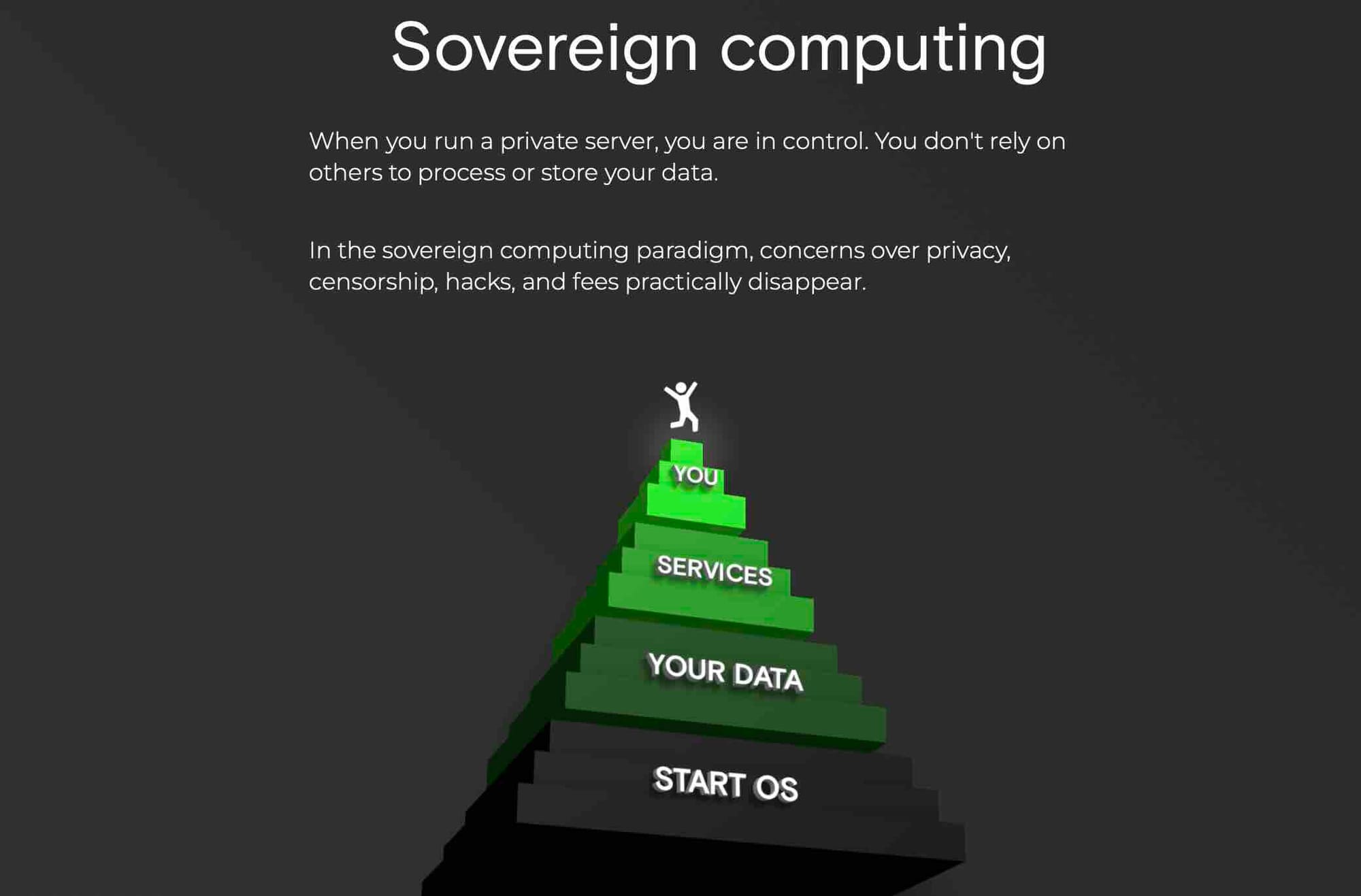
Start9 proposes an alternative: sovereign computing, where individuals run their own servers and control their own data.
Why People Choose to Run Their Own Node
The decision to operate a personal server node stems from a combination of practical, philosophical, and technical motivations. Understanding these reasons reveals why sovereign computing appeals to a growing segment of internet users despite requiring more involvement than traditional cloud services.
Digital Independence and Self-Reliance
Running your own node represents the digital equivalent of energy independence or food self-sufficiency. Users who operate their own servers are not dependent on corporate policies, service availability, or the continued existence of specific companies. If a cloud service shuts down, changes its terms, or raises prices dramatically, users are left scrambling for alternatives. Personal node operators avoid this vulnerability entirely by maintaining direct control over their infrastructure.
The Start9 Solution: StartOS
Technical Architecture
StartOS is the cornerstone of Start9's vision. Positioned as the Windows or macOS equivalent for personal servers, StartOS dramatically reduces the technical barrier to self-hosting. The operating system handles the complexity of discovering, installing, configuring, and managing open-source software packages, creating a distribution platform that open-source developers have long needed.
The system operates as a trust-minimized platform. Users can install software from anywhere in the world without relying on any single authority to verify or approve applications. This represents a fundamental departure from traditional app stores, which function as centralized gatekeepers. The entire platform is open source, with code available on GitHub for public scrutiny and contribution.
User Experience
Start9 has invested heavily in user interface design, recognizing that technical capability means nothing if the average person cannot use it. The StartOS interface presents users with an intuitive dashboard for managing their services, monitoring system health, and configuring settings. This focus on usability distinguishes Start9 from earlier self-hosting solutions that required command-line expertise.
The company offers two paths for users: purchasing pre-built servers from their store or following do-it-yourself guides to install StartOS on existing hardware. This flexibility allows technically inclined users to experiment while providing turnkey solutions for those who prefer simplicity.
The Marketplace Ecosystem
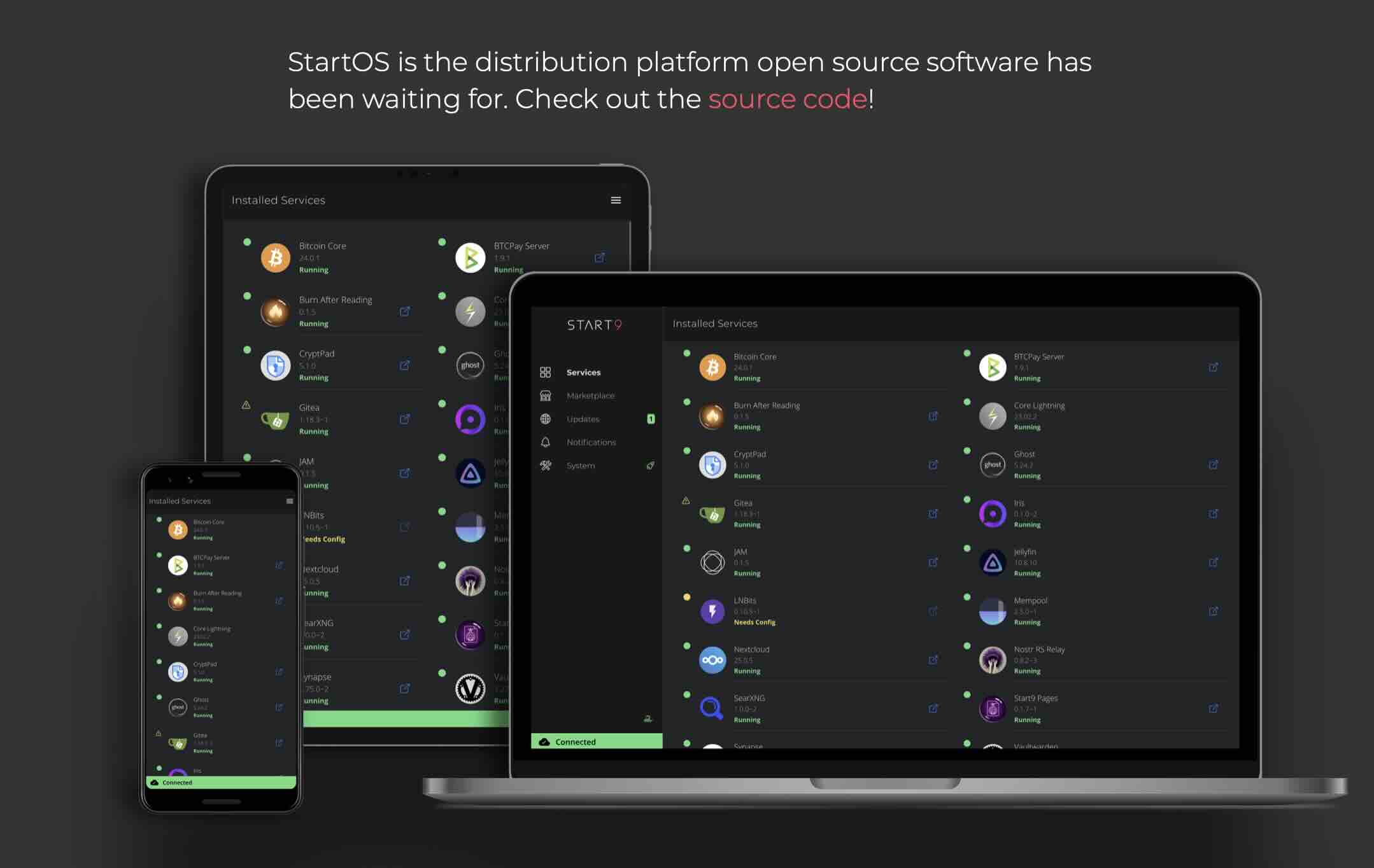
Start9's marketplace represents the practical implementation of their philosophy. Users can browse and install various open-source applications directly through StartOS, from file storage and media servers to communication tools and cryptocurrency nodes. Each application runs in an isolated environment on the user's server, ensuring that if it can be self-hosted, it can run on StartOS.
For developers, Start9 provides comprehensive documentation for packaging services. The company describes this process as challenging but rewarding, emphasizing the creative aspects of adapting applications for their platform. This developer-friendly approach aims to build a robust ecosystem of self-hosted alternatives to popular cloud services.
 Start9
Philosophical Framework: Sovereign Computing
Start9 articulates a clear philosophical distinction between cloud computing and sovereign computing. Their pyramid diagrams effectively illustrate this difference. In the cloud computing model, users sit at the bottom of an inverted pyramid, supporting the weight of intermediary services above them. In sovereign computing, the pyramid rights itself, with StartOS providing the foundation for user empowerment.
The company's messaging emphasizes autonomy and control. Their tagline, 'Be your own everything,' encapsulates the vision of users owning their digital infrastructure rather than renting it from corporations. This philosophy resonates with growing concerns about digital rights, surveillance, and corporate control of personal data.
Support and Documentation
Start9 recognizes that transitioning from cloud services to self-hosting represents a significant paradigm shift for most users. Their support infrastructure reflects this understanding. The company boasts about having the best customer support in the galaxy, emphasizing that real humans provide assistance rather than automated systems.
The documentation spans multiple resources including comprehensive guides, FAQs, developer documentation, and video tutorials. This multi-format approach accommodates different learning styles and technical backgrounds. The emphasis on providing context and knowledge rather than just troubleshooting steps indicates a commitment to user education.
Business Model and Transparency
Start9's business model centers on hardware sales and potentially service packages, though the company provides limited public information about pricing tiers or subscription services. The transparency extends to privacy commitments, with their website prominently stating they have never received secret government requests for user information. This warrant canary serves as a trust signal for privacy-conscious users.
The company accepts contributions from the community and offers employment opportunities, suggesting a growing organization. Their donation page provides a mechanism for supporters to contribute financially to the project's development.
Strengths and Opportunities
Key Strengths
- Accessibility: Start9 has successfully reduced technical complexity, making self-hosting viable for non-experts.
- Open Source Foundation: The commitment to open-source principles builds trust and enables community contribution and auditing.
- Clear Value Proposition: The company articulates privacy, security, and cost benefits in understandable terms.
- Developer-Friendly Platform: Comprehensive documentation and packaging tools facilitate ecosystem growth.
- Strong Support Infrastructure: Emphasis on human support and educational resources demonstrates commitment to user success.
Challenges and Considerations
- Network Effects: Cloud services benefit from massive network effects and integration ecosystems that self-hosted solutions cannot easily replicate.
- Maintenance Responsibility: Users assume responsibility for hardware maintenance, software updates, and security configurations that cloud providers handle automatically.
- Initial Investment: Hardware costs and setup time represent barriers compared to the immediate accessibility of cloud services.
- Application Availability: While the marketplace continues to grow, it cannot match the breadth of applications available through major cloud platforms.
- Internet Dependency: Personal servers still require reliable internet connections and may face challenges with residential ISP policies regarding server hosting.
Market Position and Impact
Start9 operates in a niche but growing market. The company is not attempting to compete directly with enterprise cloud providers or convince everyone to abandon cloud services entirely. Instead, they target privacy-conscious individuals, technology enthusiasts, and those disillusioned with Big Tech's data practices. This focused approach allows them to serve their audience effectively without overextending.
The broader impact of Start9 extends beyond their immediate user base. By demonstrating that personal server ownership can be accessible, they challenge the assumption that centralized cloud computing represents the only viable model. Even if sovereign computing remains a minority choice, its existence provides competitive pressure and offers an exit option for users dissatisfied with cloud services.
Future Outlook
The success of Start9 will likely depend on several factors: continued development of StartOS, growth of the application marketplace, effectiveness of user education efforts, and broader cultural attitudes toward privacy and digital sovereignty. As concerns about data privacy, corporate surveillance, and platform censorship intensify, Start9's value proposition becomes increasingly relevant.
The open-source nature of the project ensures that even if Start9 as a company faces challenges, the technology and philosophy can persist through community maintenance and development. This resilience represents an important feature of the sovereign computing model itself.
Conclusion
Start9 represents a thoughtful and principled attempt to democratize personal server technology. The company has correctly identified significant problems with cloud computing and developed a viable alternative that addresses privacy, security, and autonomy concerns. StartOS demonstrates that self-hosting need not require extensive technical expertise, and the growing marketplace suggests that an ecosystem of sovereign computing applications is feasible.
However, potential users must approach sovereign computing with realistic expectations. Self-hosting offers genuine benefits but also requires commitment, initial investment, and acceptance of new responsibilities. Start9 has done admirable work in reducing barriers, but cannot eliminate all tradeoffs between convenience and control.
For individuals who value digital autonomy and are willing to engage with technology more actively, Start9 provides an excellent platform for reclaiming control over personal data and digital infrastructure. The company's emphasis on education, support, and open-source principles suggests a sustainable approach to building the sovereign computing future they envision.
As the conversation around digital privacy and data sovereignty continues to evolve, Start9 stands as a practical demonstration that alternatives to cloud computing not only exist but can be made accessible to ordinary users. Whether sovereign computing becomes mainstream or remains a choice for the technically inclined and privacy-conscious, Start9 has made a significant contribution to expanding that choice.
Rating: 4.5/5 stars
Recommended for: Privacy advocates, technology enthusiasts, individuals seeking alternatives to Big Tech, developers interested in self-hosting, and anyone concerned about data sovereignty.
