Bitcoin's transparency is both a strength and a weakness. While the open ledger enables trustless verification, it also means that anyone can trace transaction flows and link addresses to real-world identities.
Enter Silent Payments, an innovative protocol designed to bring stronger privacy to Bitcoin without compromising its core principles.

What Are Silent Payments?
Silent Payments is a protocol that allows users to publish a single, static payment code that can be used to receive unlimited Bitcoin payments without revealing their transaction history or creating address reuse problems. Each payment sent to a Silent Payment address automatically generates a unique on-chain address, making it impossible for outside observers to link multiple payments to the same recipient.
Think of it as a permanent Bitcoin address that never actually appears on the blockchain. Instead, it serves as a formula that senders use to generate fresh, one-time addresses for each transaction.
The Privacy Problem Silent Payments Solve
Traditional Bitcoin usage faces several privacy challenges:
👉 Address Reuse: When you share a Bitcoin address publicly, say, for donations or business payment, every transaction to that address is publicly linked together. Anyone can see your total balance and transaction history simply by looking up the address on a block explorer.
👉 Address Management Overhead: Privacy-conscious users must generate and share new addresses for every transaction. This creates logistical headaches, especially for donations, recurring payments, or situations where you can't interact with the sender in real-time.
👉 Payment Correlation: Even when using different addresses, advanced blockchain analysis can sometimes link transactions together through timing, amounts, or other on-chain patterns.
Silent Payments elegantly solve these issues by enabling static payment codes that don't compromise privacy.
How Silent Payments Work
The Silent Payments protocol uses elliptic curve cryptography to create a sophisticated yet elegant system:
- The Recipient generates a Silent Payment address (starting with "sp1") and shares it publicly on their website, social media, or anywhere else.
- The Sender uses this Silent Payment address along with their own private key to mathematically derive a unique, one-time Bitcoin address.
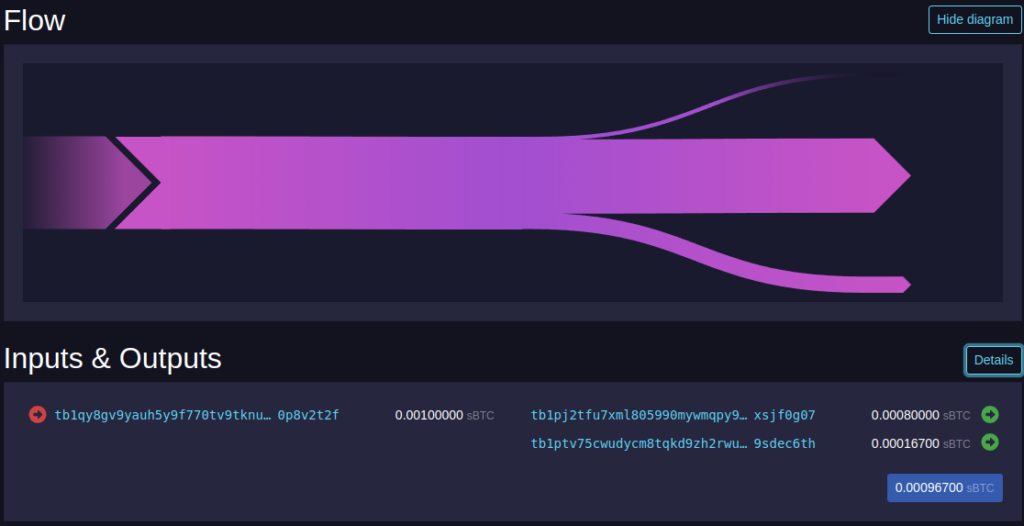
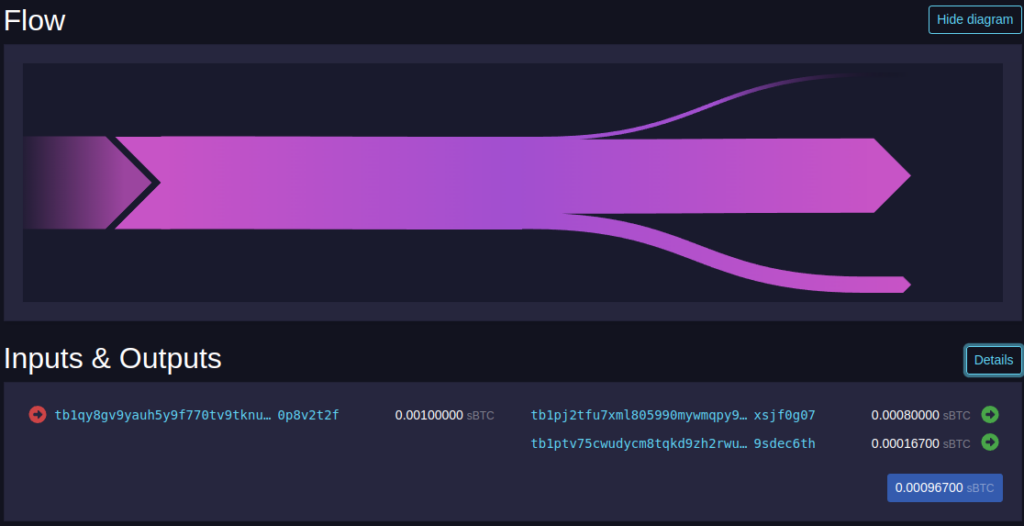
- The Transaction goes to this freshly generated address on the blockchain. To anyone observing the blockchain, this looks like a payment to a random, never-before-seen address.
- The Recipient scans the blockchain using their Silent Payment private key. Through the same cryptographic process (in reverse), they can identify which transactions belong to them and derive the private keys needed to spend those funds.
Key Benefits
Enhanced Privacy: Each payment generates a unique address, preventing transaction linking and balance tracking by third parties.
Simplicity for Recipients: Publish one address and receive unlimited payments without the complexity of managing hundreds of addresses or running specialized infrastructure.
No External Dependencies: Unlike other privacy solutions, Silent Payments don't require additional protocols, servers, or coordination between parties beyond the blockchain itself.
Backward Compatible: Silent Payments work within Bitcoin's existing framework and don't require consensus changes or hard forks.
Donation-Friendly: Perfect for content creators, open-source developers, and charities who need a public, permanent way to receive funds without sacrificing privacy.
Technical Considerations
While Silent Payments offer compelling advantages, there are some technical tradeoffs to understand:
Scanning Requirements: Recipients must scan the blockchain to detect incoming payments. This is more resource-intensive than simply monitoring a known address. However, light client solutions and third-party scanning services are being developed to mitigate this burden.
Sender Compatibility: The sender's wallet must support the Silent Payments protocol. As the protocol is relatively new, adoption is still growing across Bitcoin wallets.
Transaction Size: Silent Payments transactions are slightly larger than standard transactions due to additional data requirements, resulting in marginally higher fees.
How to Use Silent Payments: Practical Guide
Supported Wallets
As of early 2025, Silent Payments support is still growing, but several wallets have already implemented this feature:
Cake Wallet (Mobile & Desktop)
- Platform: Android, iOS, macOS, Windows, Linux
- Status: First wallet with full Silent Payments support
- Type: Hot wallet (software wallet)
- Download: Available from app stores or cakewallet.com
BitBox02 (Hardware Wallet)
- Type: Hardware wallet
- Status: First hardware wallet supporting Silent Payments
- Use Case: Secure sending to Silent Payment addresses
Step-by-Step: Using Silent Payments with Cake Wallet
For Recipients (Receiving Payments)
 Nakamoto Builder
- Download and Install Cake Wallet
- Get it from your device's app store or the official website
- Create a new Bitcoin wallet or use an existing one
- Enable Silent Payments
- On the home screen, you'll see a "Silent Payments" card/button
- Tap it to start scanning blocks for Silent Payment transactions
- The wallet will scan from when you first opened it and continue where it left off
- Get Your Silent Payment Address
- Tap "Receive" on the home screen
- At the top, tap on the current address type
- Select "Silent Payments" from the options
- Your Silent Payment address will start with "sp1"
- Share this address publicly—on your website, social media, GitHub, etc.
- Configure Scanning Settings (Optional)
- Go to Menu → Silent Payments Settings
- Enable "Set Silent Payments Always Scanning" if you want automatic scanning of new blocks
- By default, scanning stops once it reaches the current block height
Important Note: Silent Payments require on-device scanning for privacy. This means:
- Higher battery consumption during scanning
- More processing power needed
- Better privacy (the server doesn't know which transactions are yours)
For Senders (Sending Payments)
- Ensure Your Wallet Supports Silent Payments
- Use Cake Wallet or another compatible wallet
- Check silentpayments.xyz for an updated list
- Send Like Any Normal Transaction
- Tap "Send" in your wallet
- Paste the recipient's Silent Payment address (starts with "sp1")
- Enter the amount
- Confirm and send
The wallet automatically handles the cryptographic magic behind the scenes, deriving a unique one-time address from the Silent Payment code. To you, it feels exactly like a normal Bitcoin transaction.
Identifying Silent Payment Addresses
Silent Payment addresses are easy to recognize:
- They always start with "sp1"
- They're longer than regular Bitcoin addresses
- Example format:
sp1qqw6vczcfpdh5nf5y2ky99kmqae0tr30hgdfg88parz50cp80qtcasqte6wqahzh3l6l5jjge6dss2yneecm2xrd5cnzty0c5f0kyjgmm7g6tu6kx
Tips for Using Silent Payments
For Donation Recipients:
- Post your Silent Payment address on your website, blog, or GitHub
- No need to generate new addresses for each donor
- Your entire transaction history stays private
For Privacy-Conscious Users:
- Use Silent Payments for recurring payments from the same person
- Combine with other privacy tools like Tor support in Cake Wallet
- Consider using coin control features to avoid linking UTXOs
For Businesses:
- Use Silent Payments for customer payments without exposing revenue
- Keep separate labeled Silent Payment addresses for different revenue streams
- The built-in labeling feature helps identify payment sources without compromising privacy
Limitations to Be Aware Of
- Both Parties Need Compatible Wallets: The sender's wallet must support sending to Silent Payments, and the recipient needs a wallet that can scan for them.
- Scanning Requirements: Recipients must scan the blockchain to detect payments, which is resource-intensive compared to standard address monitoring.
- Early Adoption Phase: While functional and secure, Silent Payments are still relatively new. More wallet support is expected throughout 2025-2026.
For the most up-to-date list of supporting wallets, visit silentpayments.xyz.
Current Status and Adoption
Silent Payments were formally proposed in BIP-352 (Bitcoin Improvement Proposal 352) and have been gaining traction in the Bitcoin developer community. Several wallets are implementing or planning to implement support, and the protocol continues to be refined based on real-world testing and feedback.
The protocol represents a significant step forward for Bitcoin privacy, offering a practical solution that doesn't require complex second-layer protocols or centralized intermediaries.
Use Cases
Content Creators and Donations: YouTubers, bloggers, and podcasters can share a single Silent Payment address without exposing their donation history.
Businesses: Merchants can use Silent Payments for customer payments while keeping revenue private from competitors and the public.
Privacy-Conscious Individuals: Anyone who values financial privacy can use Silent Payments for regular transactions without the overhead of constantly generating new addresses.
Open Source Projects: Developers can include Silent Payment addresses in their repositories for tips and funding without compromising privacy.
The Future of Bitcoin Privacy
Silent Payments represent an important evolution in Bitcoin's privacy toolkit. While they don't provide the same level of privacy as more complex solutions like CoinJoin or the Lightning Network, they offer a practical, user-friendly middle ground that significantly improves privacy for everyday use.
As wallet support increases and the ecosystem matures, Silent Payments could become a standard feature for Bitcoin users who want to balance transparency with personal privacy. For a technology built on a public ledger, that's a remarkable achievement.
In the ongoing quest to make Bitcoin both transparent and private, Silent Payments prove that clever cryptography can solve seemingly contradictory requirements, giving us the best of both worlds.