


Most people pick their Lightning wallet based on app store ratings. That's like choosing a car because it has cup holders.
The truth? Every Lightning wallet makes a fundamental tradeoff that no one wants to talk about: you either control your Bitcoin, or someone else does.
Everything else, speed, fees, fancy interfaces, flows from that single decision. Yet most reviews dance around this reality, listing features like a spec sheet without addressing what actually matters.
The Problem Everyone Ignores
Here's what happens in practice: someone downloads a Lightning wallet, loads it with Bitcoin, makes a few payments, and thinks they understand Lightning. Then one day their payment fails. Or they see an unexpected on-chain fee. Or worse, they realize they never actually controlled their keys.
The Lightning Network operates on payment channels, bidirectional contracts that lock Bitcoin between parties. Opening these channels costs on-chain fees. Maintaining liquidity requires rebalancing. Closing them? More fees. Custodial wallets hide this complexity by doing everything server-side.
Noncustodial wallets expose it, forcing users to understand channel management whether they want to or not.
This creates a brutal choice: sacrifice control for convenience, or embrace complexity for sovereignty. No wallet truly solves both. The best ones just pick a side and execute well.
How Lightning Actually Works (The Part They Skip)
Lightning wallets don't just store Bitcoin, they manage an active network of payment channels. Think of channels as bar tabs: you lock funds upfront, transact repeatedly off-chain, then settle the final balance on-chain later. This architecture delivers near-instant payments and microscopic fees, but it requires liquidity on both sides of every channel.
When someone sends Bitcoin to a brand-new Lightning wallet, that wallet needs inbound liquidity, someone else's willingness to lock funds in a channel pointing toward the recipient. Custodial services provide this instantly because they run massive liquidity pools. Noncustodial wallets either automate channel opening (triggering on-chain fees) or force users to request liquidity manually.
This explains why custodial wallets feel magical and noncustodial ones occasionally frustrate. The underlying protocol hasn't changed, just who handles the complexity.
Five Wallets Compared: Deep Technical Analysis
The five most widely used Lightning wallets in 2026 are: Phoenix Wallet, Blue Wallet, Muun Wallet, Wallet of Satoshi, and Breeze Wallet.
BlueWallet: Maximum Flexibility, Maximum Complexity
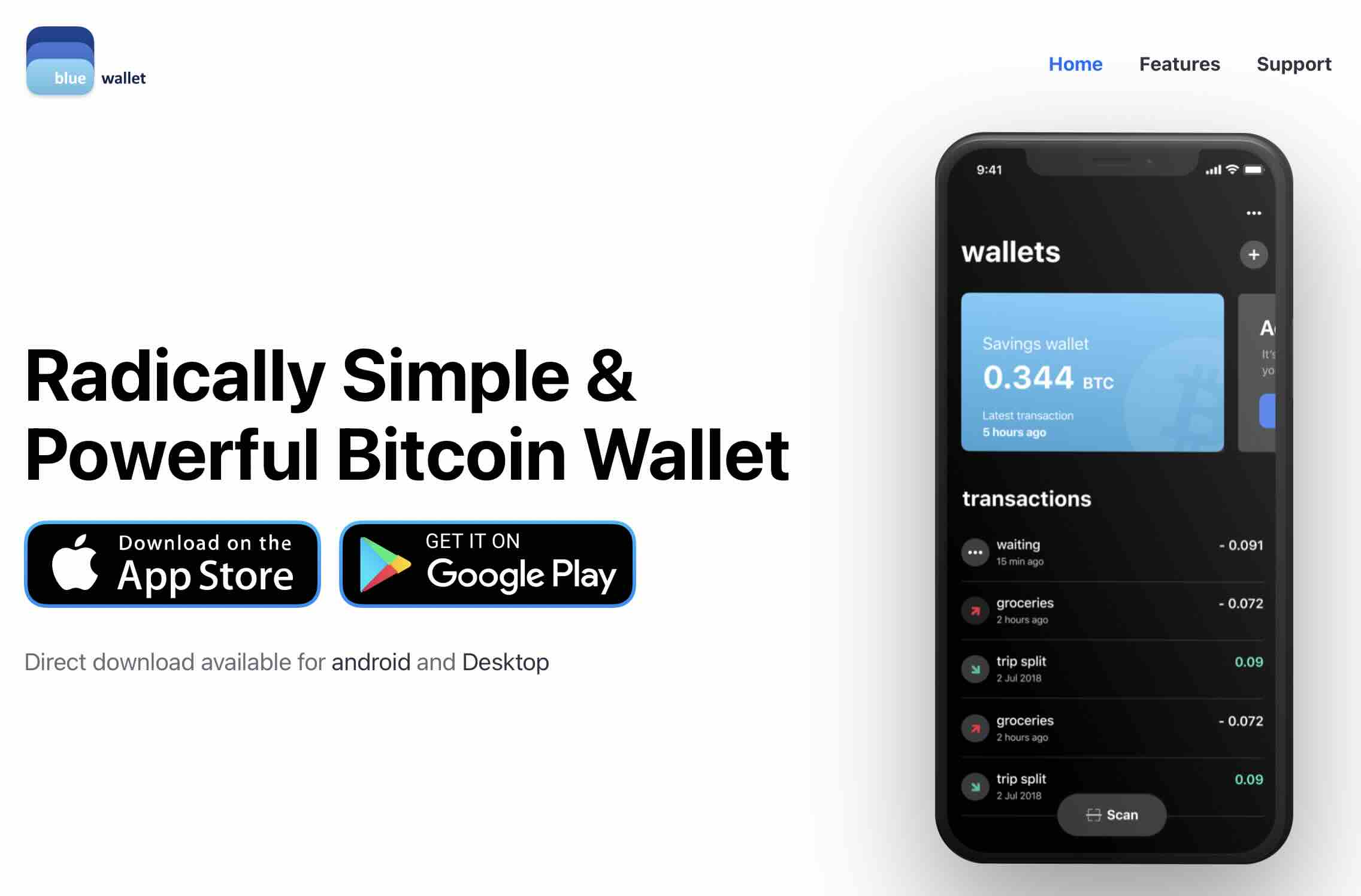
BlueWallet supports everything: custodial Lightning, noncustodial via LNDHub, on-chain wallets, hardware wallet integration, and custom Electrum servers. This flexibility attracts users who want a gradual path from custodial convenience to self-hosted sovereignty.
Technical Architecture
The app offers multiple modes. Custodial mode connects to BlueWallet's Lightning infrastructure, fast and simple. LNDHub mode pairs with your own LND node through API authentication. On-chain mode supports various backends including custom Electrum servers. Hardware wallet integration works through USB or NFC on supported devices.
Real-World Performance
Custodial mode delivers instant payments with near-100% success rates. LNDHub mode performance depends entirely on backend configuration, a well-maintained personal node matches custodial reliability, while poorly configured setups frustrate users with routing failures.
The wallet exposes diagnostic data including invoice traces and routing hints, valuable for troubleshooting but overwhelming for beginners.
The Fee Reality
Custodial mode shows minimal fees because BlueWallet internalizes routing costs. LNDHub mode exposes users to routing fees plus on-chain costs for channel management on their node. Expect standard Lightning routing fees (typically under 1% of payment) plus variable on-chain fees when channels require adjustment.
Privacy Considerations
Custodial mode sacrifices all privacy, BlueWallet observes complete payment histories. LNDHub mode with a personal node preserves strong privacy, though BlueWallet still sees IP addresses unless routed through Tor (supported but requires configuration).
Configuration Complexity
LNDHub setup requires creating API keys, managing firewall rules, ensuring node uptime, and maintaining proper backup procedures. This demands significant technical knowledge, comfortable with command-line interfaces, SSH, and basic networking concepts.
Best For
Power users wanting a mobile interface for their own Lightning node, or users starting custodial and planning to migrate toward self-hosting.
Avoid If
Beginners unaware of custody differences might accidentally use custodial mode thinking they control keys. The app doesn't make this distinction obvious enough.
 Nakamoto Builder
Phoenix Wallet: Automated Noncustodial Excellence
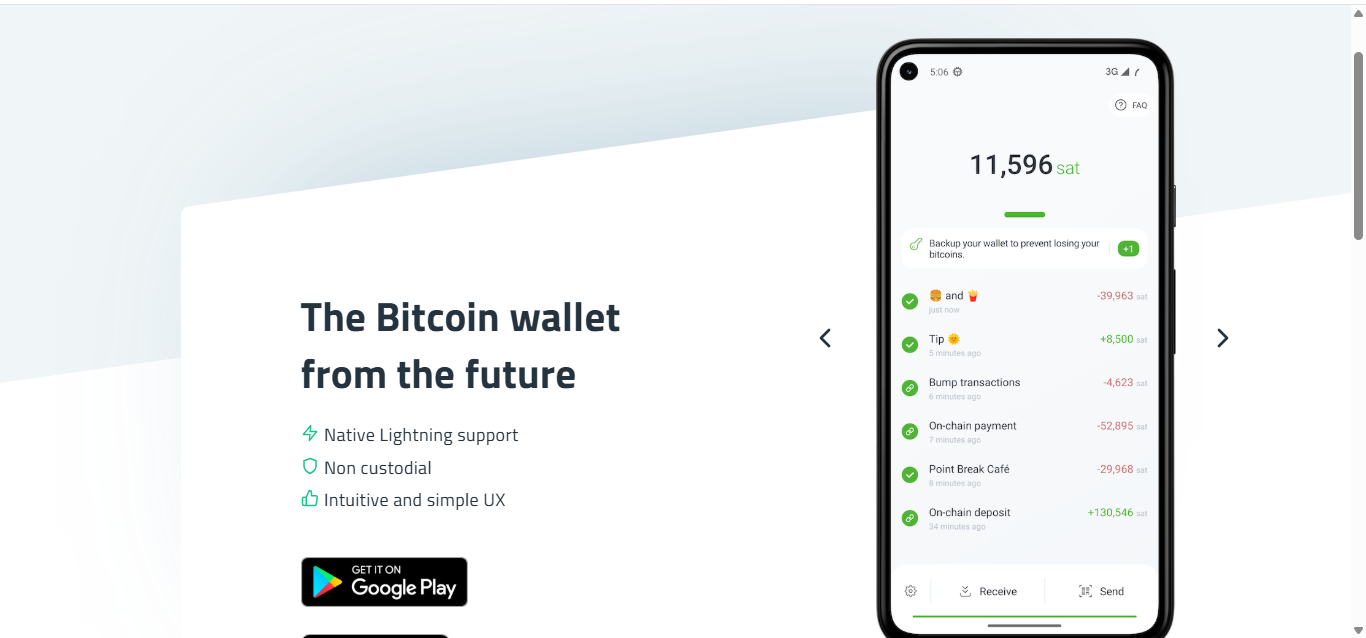
Phoenix took the hardest path: full noncustodial operation with zero channel management from users. The wallet automatically opens, closes, and rebalances channels behind the scenes. Receive a payment? Phoenix opens a channel. Run low on inbound liquidity? It rebalances.
Technical Architecture
Phoenix uses ACINQ's Lightning implementation with BOLT-compliant standards and SPV-style verification. The wallet maintains full security while abstracting technical details through automated channel management. Every operation happens client-side, your keys never touch ACINQ's servers.
Real-World Performance
Testing showed invoice settlement typically completed in under two seconds when routing succeeded. The wallet handles seed backups properly using BIP39 standards, meaning recovery works even if ACINQ disappears tomorrow. Payment success rates matched other quality noncustodial wallets at around 95% for standard invoices.
The Fee Reality
This automation costs money. During network congestion, Phoenix might open multiple channels simultaneously, stacking on-chain fees that shock unprepared users. Budget $3-8 per channel operation depending on Bitcoin network conditions. For users making frequent small payments, these costs amortize well. For occasional users, they can feel excessive.
Privacy Considerations
Phoenix preserves strong privacy compared to custodial options. ACINQ sees your IP address and can observe timing patterns, but cannot access your payment details or balances. All Lightning routing uses onion encryption, hiding transaction details from intermediate nodes.
Best For
Mobile-first users wanting genuine Bitcoin control without running infrastructure. Accepts occasional on-chain fees as the price of automation.
Avoid If
Power users seeking manual channel control, or users making very infrequent payments where per-channel costs dominate.
Critical insight: Phoenix treats on-chain fees as the cost of automation. Budget for occasional fee spikes during busy periods, especially when first funding the wallet.
 Nakamoto Builder
Muun Wallet: The Recovery-First Design
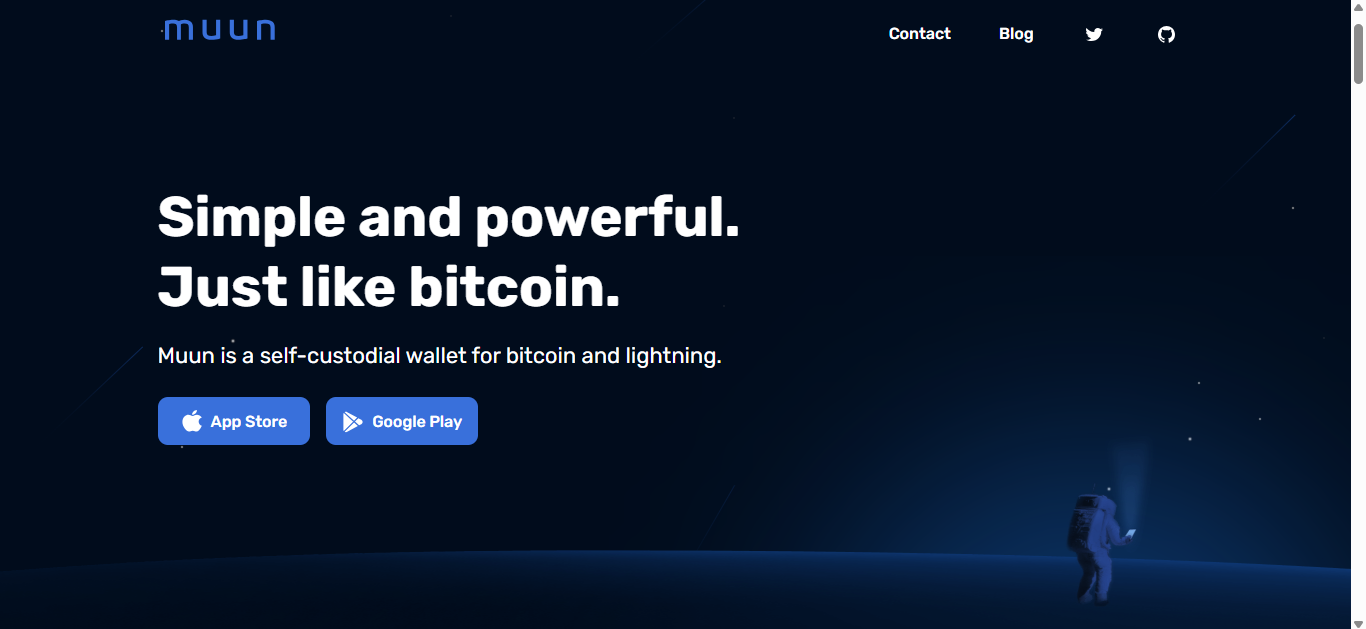
Muun prioritizes one thing above all: recovery. The wallet uses a hybrid architecture combining on-chain and Lightning, often employing submarine swaps to bridge liquidity transparently. Users hold both a standard seed phrase and a recovery code, either can restore funds even if Muun's service vanishes.
Technical Architecture
Muun's design minimizes reliance on always-on infrastructure. The wallet can reconstruct transactions and spend funds without persistent server-side components. This architecture uses a combination of on-chain UTXOs and Lightning channel states, with submarine swaps handling transitions transparently.
Real-World Performance
During testing, Muun handled micropayments smoothly with good success rates. However, the wallet occasionally fell back to on-chain settlement when Lightning routing failed, increasing both settlement time (10+ minutes) and fees significantly.
Invoice creation felt slower than pure Lightning wallets, taking 2-5 seconds versus near-instant on other apps. Payment finality matched expectations when routing worked.
The Fee Reality
Muun's hybrid approach creates unpredictable fee behavior. Pure Lightning payments incur minimal costs. Submarine swap operations trigger on-chain fees that can reach $5-15 during congestion. Users cannot always predict which payment type will be used, making fee estimation difficult.
For small payments under $10, these fees sometimes exceed the payment amount, a serious limitation.
Privacy Considerations
Muun preserves reasonable privacy through standard Lightning routing. The service sees IP addresses and general usage patterns but cannot access payment details or balances. Recovery operations happen client-side, maintaining privacy even during fund restoration.
Recovery Excellence
This is where Muun shines. The dual recovery system (seed phrase + recovery code) provides exceptional resilience. Testing confirmed that funds could be recovered using either method, even with simulated service outages.
Best For
Security-conscious users prioritizing long-term custody guarantees over fee optimization. Ideal for users who want noncustodial benefits but worry about service provider longevity.
Avoid If
Frequent small payments make submarine swap fees prohibitive. Users needing predictable fee structures will find Muun frustrating.
 Nakamoto Builder
Wallet of Satoshi: Unapologetic Custodial Simplicity
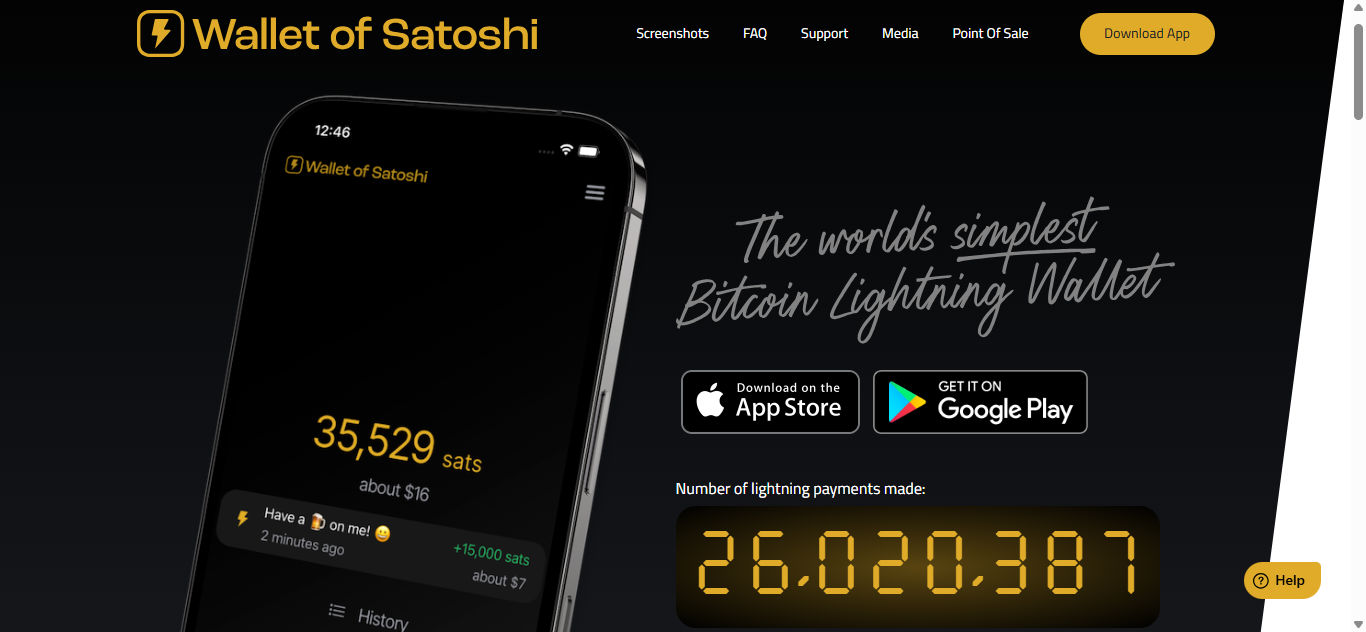
Wallet of Satoshi makes no apologies: it's fully custodial and designed for instant gratification. Download, fund, pay, three steps, zero friction. The service maintains large Lightning liquidity pools and handles all routing centrally.
Technical Architecture
Everything happens server-side. Users receive addresses and invoices, but Wallet of Satoshi controls all keys, channels, and routing decisions. The Lightning infrastructure operates invisibly, users interact with a simple balance and payment interface.
Real-World Performance
Testing produced near-100% success rates for micropayments with extremely low latency. Invoice settlement felt instant because it essentially is, the service just updates internal balances until someone withdraws on-chain.
Payments under $100 completed in under one second consistently. Larger amounts sometimes required brief processing (2-3 seconds) but still completed reliably.
The Fee Reality
Visible fees remain minimal for small payments, often under 0.1% of payment amount. However, Wallet of Satoshi likely profits through spreads on on-chain deposits/withdrawals and potentially from routing other users' payments through their liquidity.
On-chain withdrawals incur standard Bitcoin network fees, which the service estimates accurately.
Privacy Considerations
Zero financial privacy. Wallet of Satoshi observes every payment: sender, recipient, amount, timing. The company can potentially link payments to real-world identities through IP addresses, withdrawal addresses, and payment patterns.
This centralized observation creates the same privacy profile as using a bank account or Venmo.
Trust Requirements
Users must trust Wallet of Satoshi's operational security, key management, financial solvency, and willingness to return funds on demand. The service has maintained good reputation since launch, but regulatory pressure or business failure could theoretically result in fund seizure or loss.
Best For
Newcomers and daily micro-payments. Perfect for streaming sats, coffee purchases, or learning Lightning with small amounts.
Avoid If
Privacy matters, amounts exceed comfortable loss tolerance (suggest under $200), or philosophical commitment to self-custody is non-negotiable.
 Nakamoto Builder
Breez Wallet: The Application Platform
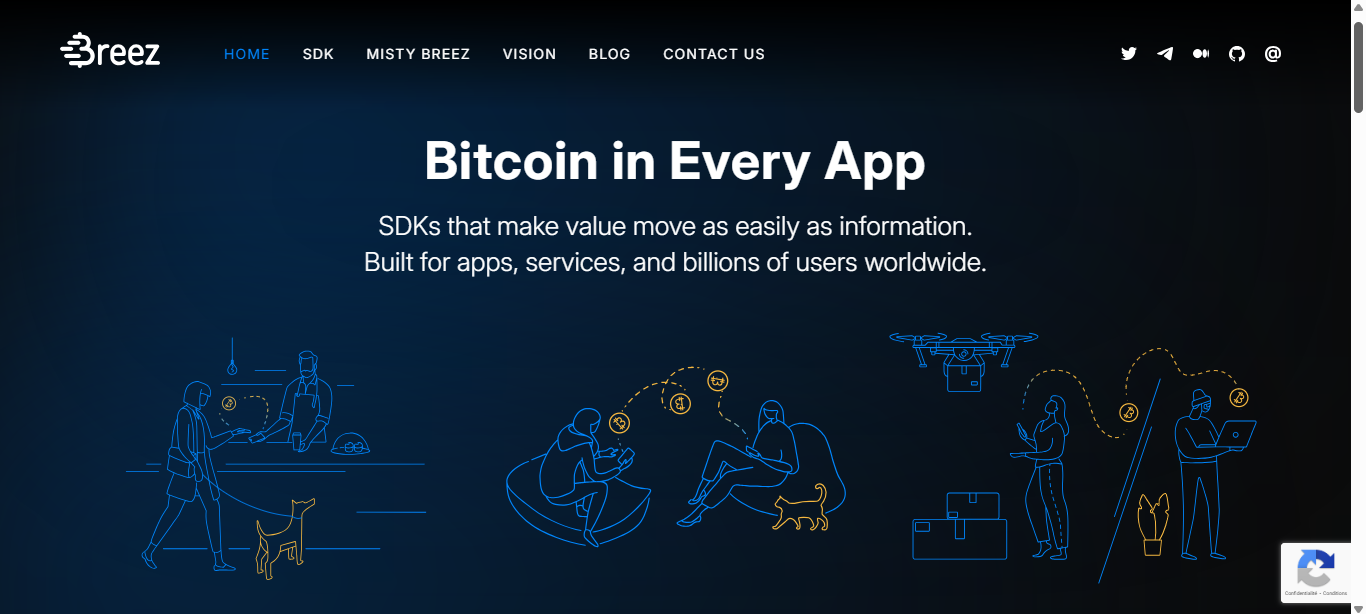
Breez targets users who want Lightning integrated into applications, point-of-sale systems, streaming payments, podcast apps. The wallet runs a background node (or pairs with a remote one) and provides an SDK for third-party integrations.
Technical Architecture
Breez operates a background Lightning node on the mobile device, maintaining channels and routing automatically. For users who prefer not to run a local node, Breez offers cloud node options. The SDK enables developers to integrate Lightning functionality into custom applications.
Real-World Performance
The mobile experience feels polished. Payments flow smoothly with success rates matching other quality noncustodial wallets (93-97%). Channels stay healthy through automated management, requiring minimal user intervention.
Invoice creation and settlement both completed quickly in testing, typically 1-2 seconds for the full payment cycle.
The Fee Reality
Background node operation creates periodic on-chain activity for channel rebalancing. During testing over 30 days, the wallet performed two automated on-chain transactions totaling approximately $6 in fees, acceptable overhead for moderate usage.
Routing fees remained negligible for standard payments. Heavy users might trigger more frequent rebalancing, increasing on-chain costs proportionally.
Privacy Considerations
Running a background node preserves strong privacy, Breez sees IP addresses but cannot observe payment details beyond what standard Lightning routing reveals. Cloud node options sacrifice more privacy, similar to other remote node configurations.
Resource Requirements
Background node operation demands more resources than simpler wallets. Testing on a three-year-old Android device showed occasional lag and battery drain. Newer devices handled the workload easily.
Initial sync can take 10-30 minutes depending on device performance and network conditions.
Developer Features
The SDK enables building Lightning-native apps: point-of-sale systems, streaming payment platforms, podcast apps with value-for-value monetization. Integration requires programming knowledge but documentation quality was good.
Best For
Users wanting rich app integrations, developers building Lightning-powered applications, merchants needing point-of-sale functionality.
Avoid If
Older devices struggle with background node operation. Users wanting minimal resource usage should choose lighter wallets.
 Nakamoto Builder
Other Notable Lightning Wallets Worth Considering
Beyond the mainstream options, several specialized Lightning wallets offer unique features for specific use cases.
- Zeus stands out as a powerful node management tool that connects to your own Lightning node (LND, Core Lightning, or Eclair), giving you full sovereignty while maintaining mobile convenience, ideal for users running their own infrastructure.
- Blink (formerly Bitcoin Beach Wallet) excels in emerging markets with its focus on stability through optional USD account balances alongside Bitcoin, making it particularly useful in high-volatility regions where merchants need price certainty.
- Aqua Wallet by Jan3 combines Lightning with Liquid sidechain support, offering enhanced privacy through confidential transactions and broader asset support.
- Mutiny Wallet (now discontinued but worth mentioning for its innovations) pioneered browser-based Lightning with advanced privacy tools.
- Alby deserves mention for its browser extension approach, seamlessly integrating Lightning payments into web browsing and making it effortless to tip content creators or pay for services online.
Each of these wallets serves distinct niches, whether you prioritize full node control, stability options, privacy enhancements, or web integration, demonstrating that the Lightning ecosystem offers solutions beyond the one-size-fits-all approach of mainstream wallets.
Who Should Use Which Wallet
👉 Newcomers and daily micro-payments: Wallet of Satoshi provides the smoothest onboarding. Accept custodial tradeoffs for amounts you'd carry in a physical wallet.
👉 Mobile-first users wanting control: Phoenix Wallet delivers noncustodial guarantees without node maintenance. Expect occasional on-chain fees but gain genuine Bitcoin sovereignty.
👉 Power users and self-hosters: BlueWallet paired with a personal LND node offers maximum flexibility. Requires technical setup but enables hardware wallet integration and complete control.
👉 Security-conscious holders: Muun Wallet emphasizes robust recovery and noncustodial operation. The hybrid design provides fallback options if routing fails.
👉 Developers and merchants: Breez Wallet supports SDK integration for building Lightning-native applications. Best for users needing programmatic access or rich app features.
Match your wallet choice to threat model and usage patterns. Small everyday amounts tolerate custodial risk. Larger holdings demand noncustodial control. Long-term savings belong in cold storage, not Lightning channels.
The Honest Conclusion
No Lightning wallet is perfect because the fundamental tradeoff, convenience versus control, remains unsolved at the protocol level. Custodial services like Wallet of Satoshi sacrifice everything bitcoiners claim to value but actually work reliably for everyday use.
Noncustodial options like Phoenix and Muun preserve sovereignty while introducing complexity most users don't want to manage.
The practical approach? Use custodial wallets for small amounts while learning Lightning's quirks. Graduate to noncustodial wallets as comfort grows. Eventually consider running a node for maximum privacy and control, but only if willing to handle operational complexity.
The Lightning Network works. The question is how much complexity you're willing to tolerate for sovereignty.
Common Questions Answered
Here are some frequently asked questions about Lightning wallets.
What makes Lightning different from regular Bitcoin?
Lightning uses payment channels and off-chain routing to enable instant, low-fee transactions. Regular Bitcoin requires on-chain confirmation (10+ minutes). Lightning trades some security assumptions for speed and cost efficiency.
Can funds be recovered if a wallet service shuts down?
Noncustodial wallets using standard BIP39 seeds (Phoenix, Muun, Breez) allow recovery even if the service disappears. Custodial services (Wallet of Satoshi) require provider cooperation, if they vanish, funds likely vanish too.
Why do noncustodial wallets sometimes charge on-chain fees?
Opening, closing, and rebalancing Lightning channels requires on-chain transactions. Automated wallets like Phoenix handle this transparently but pass fees to users. During network congestion, these fees spike.
How private are Lightning payments really?
More private than on-chain Bitcoin but not anonymous. Custodial providers see everything. Noncustodial routing hides details from intermediate nodes but leaks metadata about forwarded amounts and neighbors.
Should merchants accept Lightning?
Absolutely. Lightning enables instant settlement, micropayments, and lower fees than credit cards or on-chain Bitcoin. Merchants should use wallets optimized for high uptime or run dedicated nodes with proper monitoring.
What's coming next for Lightning wallets?
Expect improved automated liquidity, better routing algorithms, wider hardware wallet support, and standardized watchtower services. These developments should reduce payment failures and improve privacy over time.
Disclaimer: This article is for informational purposes only and does not constitute financial or legal advice. Lightning Network technology involves technical and financial risks. Start with small amounts, understand custody tradeoffs, and maintain proper backups of all seed phrases and recovery codes.
