


A Realistic Guide for Home Enthusiasts
What is Home Solo Mining?
Home solo mining represents a fundamentally different approach to Bitcoin mining than industrial operations. Rather than competing for profitability with massive mining farms, home solo miners participate in Bitcoin's network using compact, quiet devices that can sit on a desk or shelf. These miners are designed for enthusiasts who value the experience of mining Bitcoin independently, learning about the network, and supporting decentralization.
Unlike traditional ASIC miners that sound like jet engines and consume thousands of watts, home solo mining devices are whisper-quiet, energy-efficient, and produce minimal heat. They're designed to blend into your living space rather than requiring dedicated infrastructure. The primary goal isn't maximum profitability but rather participation, education, and the possibility of finding a block independently.
Solo mining means mining independently without joining a pool. While the odds of finding a block with small hash rates are astronomically low, the excitement of potentially finding an entire block reward makes it appealing to many hobbyists. Even without finding blocks, these devices help secure the Bitcoin network and provide hands-on learning about mining mechanics.
Who Should Consider Home Solo Mining?
Home solo mining appeals to a specific audience with particular goals and expectations. Understanding whether this approach suits you will help determine if investing in home mining equipment makes sense.
Ideal Candidates for Home Solo Mining
- Bitcoin enthusiasts and educators: You're passionate about Bitcoin's technology and want a tangible way to participate in the network. Teachers, content creators, or simply curious individuals who value the educational experience.
- Hobbyists and tinkerers: You enjoy building, modifying, and experimenting with technology. Many home miners customize their devices, write custom firmware, or integrate mining into home automation systems.
- Decentralization advocates: You believe in supporting Bitcoin's decentralization by running a miner independently rather than contributing hash rate to large pools. Solo mining, even at small scale, aligns with Bitcoin's original vision.
- Lottery mindset participants: You understand the incredibly long odds but enjoy the possibility of winning an entire block reward. It's similar to buying lottery tickets but with the added benefit of supporting the network.
- Space-constrained individuals: You live in an apartment or home where traditional mining is impossible due to noise, heat, or electrical limitations. Home solo miners fit on bookshelves and draw minimal power.
When Home Solo Mining May Not Be Suitable
- Seeking guaranteed profits: If your primary goal is consistent income, home solo mining will disappoint. The probability of finding blocks with devices producing 0.5-3 TH/s is extremely low, and expected returns over electricity costs are negative.
- Short-term investment mindset: Home solo mining is about long-term participation and education. If you need quick returns or can't accept spending money purely on the experience, traditional mining pools or simply buying Bitcoin makes more sense.
- No technical interest: Setting up and maintaining these devices requires basic technical skills. If you're not interested in learning about Bitcoin mining, network configuration, or troubleshooting, the investment may not be worthwhile.
The 5 Best Home Solo Mining Devices
The following devices represent the current best options for genuine home mining. These are quiet, efficient, and designed specifically for residential use. Unlike industrial ASICs, they won't disturb your living space and can operate continuously on standard household power.
1. Bitaxe 602 Gamma Bitcoin Solo Miner (100$)
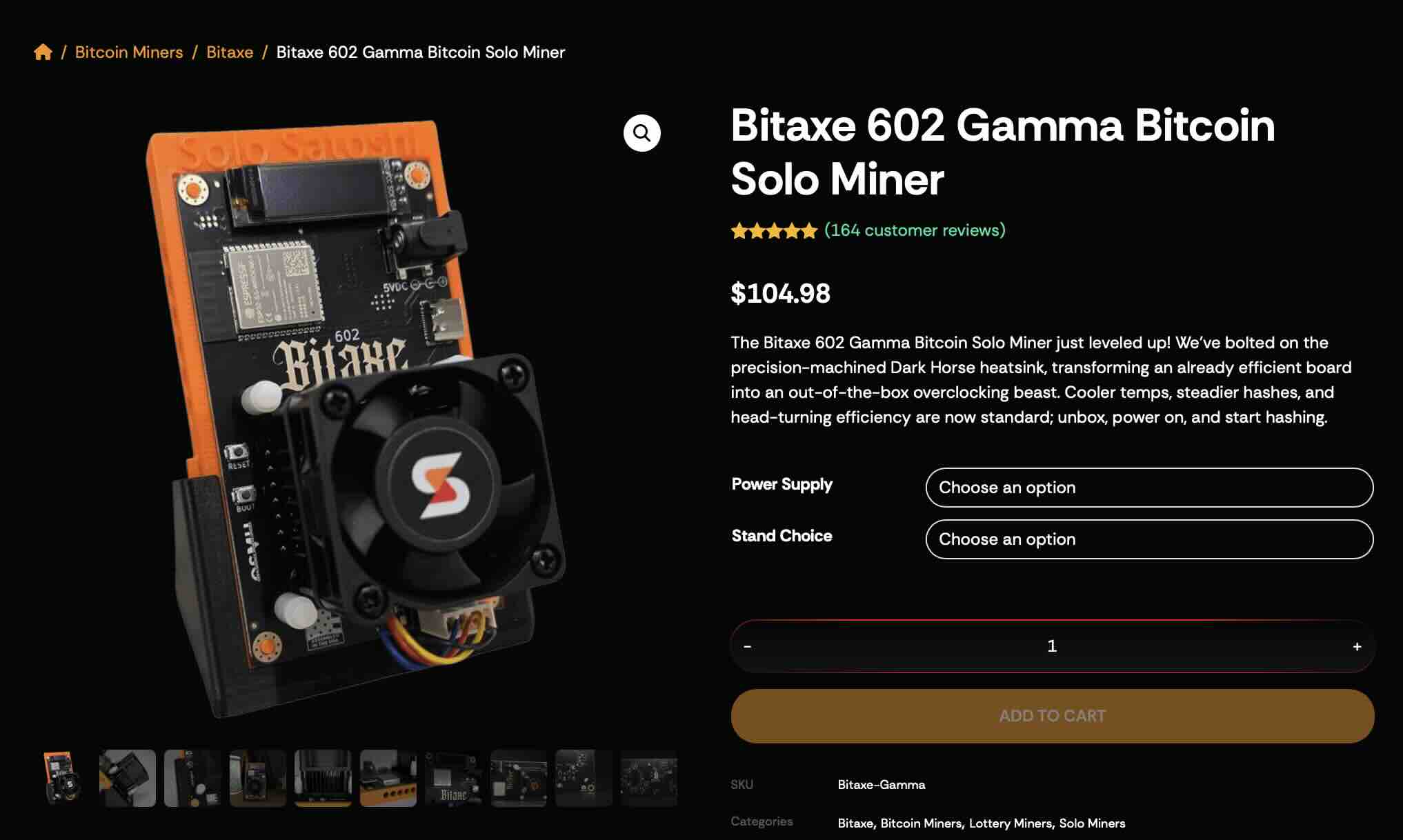
Specifications Overview
| Parameter | Details |
|---|---|
| Hash Rate | ~1.07 TH/s stock (up to 1.84 TH/s overclocked) |
| Power Consumption | 17.8W (stock settings) |
| Efficiency | 15 J/TH at default settings |
| Chip | Bitmain BM1370 (single chip) |
| Cooling | Dark Horse pin-fin heatsink with 40mm fan |
| Noise Level | 43-50 dB (whisper-quiet) |
| Connectivity | ESP32-S3 Wi-Fi module, removable OLED display |
| Size | Compact PCB with professional stand |
| Approximate Price | $104.98 |
Why It's Excellent for Home Mining
The Bitaxe 602 Gamma represents exceptional value in the home mining space, delivering professional-grade performance at an accessible price point. What sets this unit apart is the factory-installed Dark Horse heatsink—a precision-machined cooling solution with 137 anodized pin fins that transforms thermal management. This upgraded cooling system enables stable overclocking straight out of the box, with users routinely achieving 1.5-1.6 TH/s with minimal effort.
At stock settings, the 602 Gamma delivers 1.07 TH/s while drawing just 17.8 watts and maintaining an impressive 15 J/TH efficiency rating. The whisper-quiet operation (43-50 dB) makes it genuinely viable for desk placement, comparable to ambient office noise. The integrated OLED display provides at-a-glance monitoring of hash rate, temperature, and uptime without requiring a browser.
The ESP32-S3 Wi-Fi controller enables seamless wireless connectivity and browser-based configuration through AxeOS firmware. Setup takes literally minutes: connect power, join your Wi-Fi network via the web interface, enter your Bitcoin address and pool information, and start mining. The open-source nature means continuous community-driven improvements and extensive documentation for troubleshooting.
2. NerdQaxe++ Revision 6.1 Bitcoin Solo Miner ( 350$)
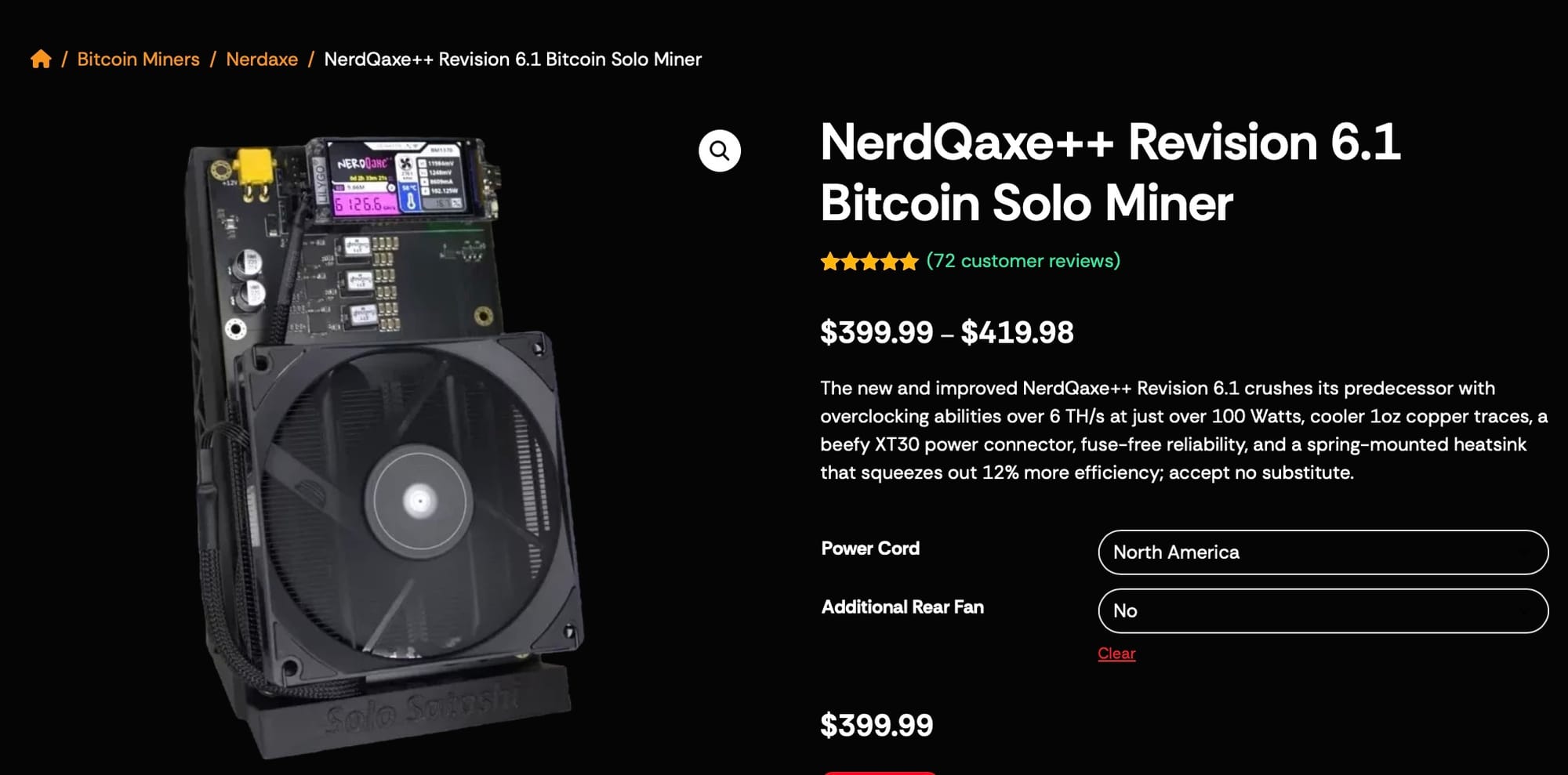
Specifications Overview
| Parameter | Details |
|---|---|
| Hash Rate | 4.82 TH/s (stock) / 6+ TH/s (overclocked) |
| Power Consumption | 70.6W (stock) / 103W (overclocked) |
| Efficiency | 14.66 J/TH (stock) / 15.65 J/TH (overclocked) |
| Chips | Four Bitmain BM1370 ASICs (from S21 Pro) |
| Cooling | 120mm fan with optional 80mm rear fan |
| Display | LilyGO 1.9" LCD (shows hashrate, temps, BTC price, network stats) |
| Power Connector | XT30 (supports up to 15A) |
| Noise Level | Moderate (quieter with Noctua fan upgrade) |
| PCB | 2mm FR-4 with 1oz copper traces |
| Size | 3.54" × 4.72" × 1.57" |
| Approximate Price | $399.99 - $419.98 |
Why It's Excellent for Home Mining
The NerdQaxe++ Revision 6.1 represents a quantum leap in home mining capability, being the world's first open-source quad-chip Bitcoin solo miner. Utilizing four Bitmain S21 Pro BM1370 ASIC chips on a single board, it delivers industrial-grade performance in a form factor that remains genuinely home-friendly. This is not a scaled-up hobby device—it's a serious mining tool engineered for enthusiasts who want substantial hash power without industrial infrastructure.
At $399.99-$419.98, the NerdQaxe++ delivers exceptional value for miners seeking substantial hash power in a compact, efficient package. It's quiet enough for home office placement (especially with upgraded fans), powerful enough for meaningful mining participation, and open enough for endless customization. For enthusiasts wanting the most capable home mining device available without compromising on design quality or community support, the NerdQaxe++ Revision 6.1 stands unmatched.
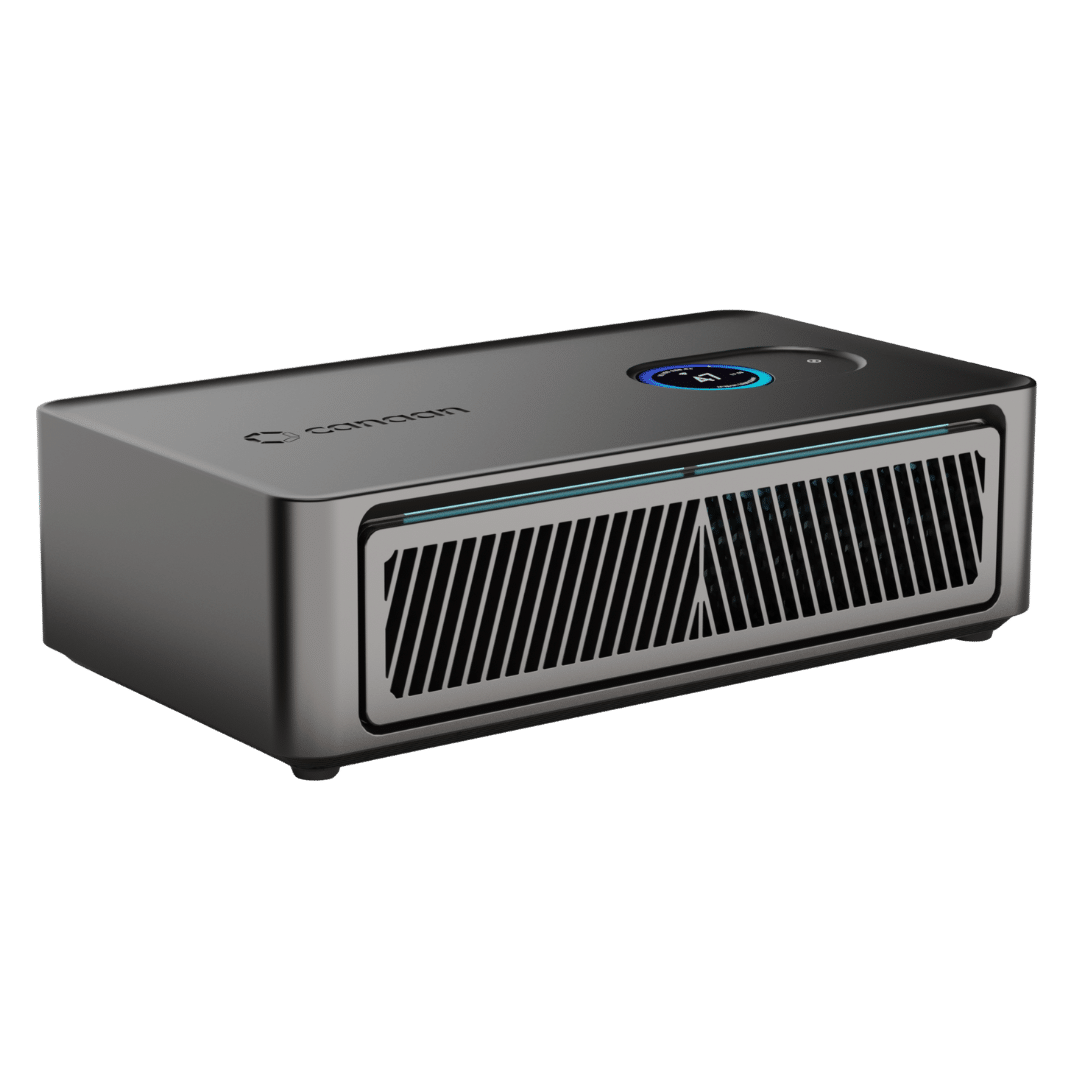
3. Canaan Avalon Nano 3S Bitcoin Solo Mining Heater
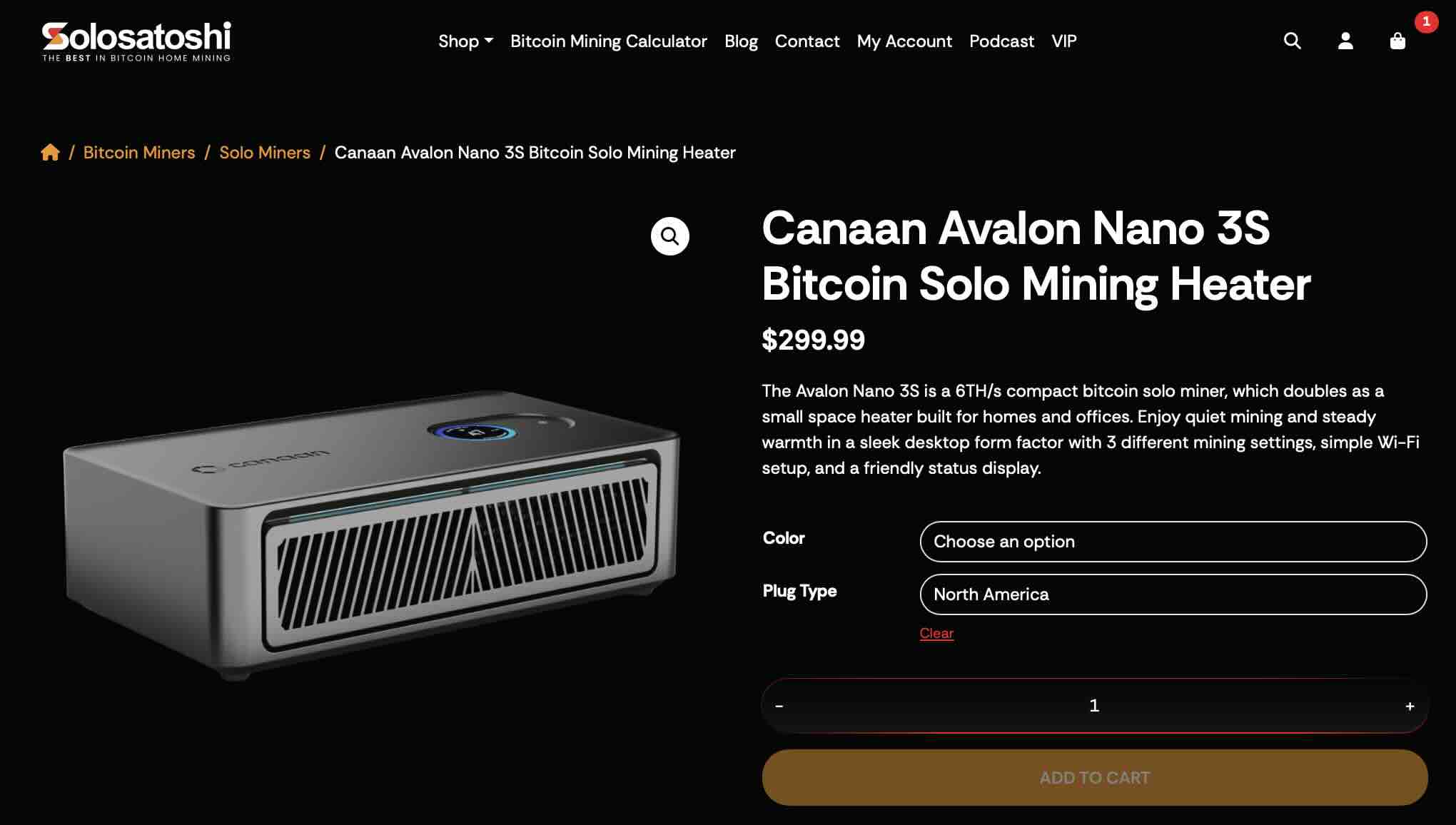
Specifications Overview
| Parameter | Details |
|---|---|
| Hash Rate | 3.1 TH/s (Low) / 4.8 TH/s (Medium) / 6.0 TH/s (High) |
| Power Consumption | 66W (Low) / 104W (Medium) / 140W (High) |
| Efficiency | 21.2 J/TH (Low) / 21.6 J/TH (Medium) / 23.3 J/TH (High) |
| Algorithm | SHA-256 |
| Cooling | Internal fan with smart airflow path |
| Noise Level | 29 dB (Low) / 32 dB (Medium) / 36 dB (High) |
| Connectivity | Wi-Fi included, Ethernet via USB adapter |
| Heat Output | 225 BTU/h (Low) / 355 BTU/h (Medium) / 478 BTU/h (High) |
| Display | Circular status display with LED indicator |
| Size | 8.07" × 4.53" × 2.30" (205 × 115 × 58.5 mm) |
| Weight | 1.9 lbs (0.86 kg) |
| Approximate Price | $299.99 |
Why It's Excellent for Home Mining
The Canaan Avalon Nano 3S represents a completely different philosophy in home mining—it's not trying to compete with dedicated miners but rather to blend seamlessly into everyday living spaces while providing a unique dual function as both a Bitcoin miner and a supplemental space heater. This is the device for people who want Bitcoin mining to be invisible, elegant, and genuinely useful beyond just hash rate.
At 6 TH/s maximum, nobody's mining the Nano 3S really expecting to find solo blocks or generate meaningful pool rewards. The value proposition centers on accessibility, aesthetics, education, and dual functionality. You're buying a beautiful desk object that happens to mine Bitcoin while optionally warming your space. The quiet operation and premium build quality justify the $299.99 price point for the target audience prioritizing livability over raw performance.
For miners seeking maximum hash rate per dollar, devices like the Bitaxe or NerdQaxe++ provide better value. But for those wanting mining that fits naturally into home environments—sitting on a nightstand mining overnight while warming the bedroom, or placed on a home office desk providing subtle heat while working—the Avalon Nano 3S occupies a unique position. It makes Bitcoin mining approachable, attractive, and practical for mainstream adoption beyond the hardcore enthusiast community.

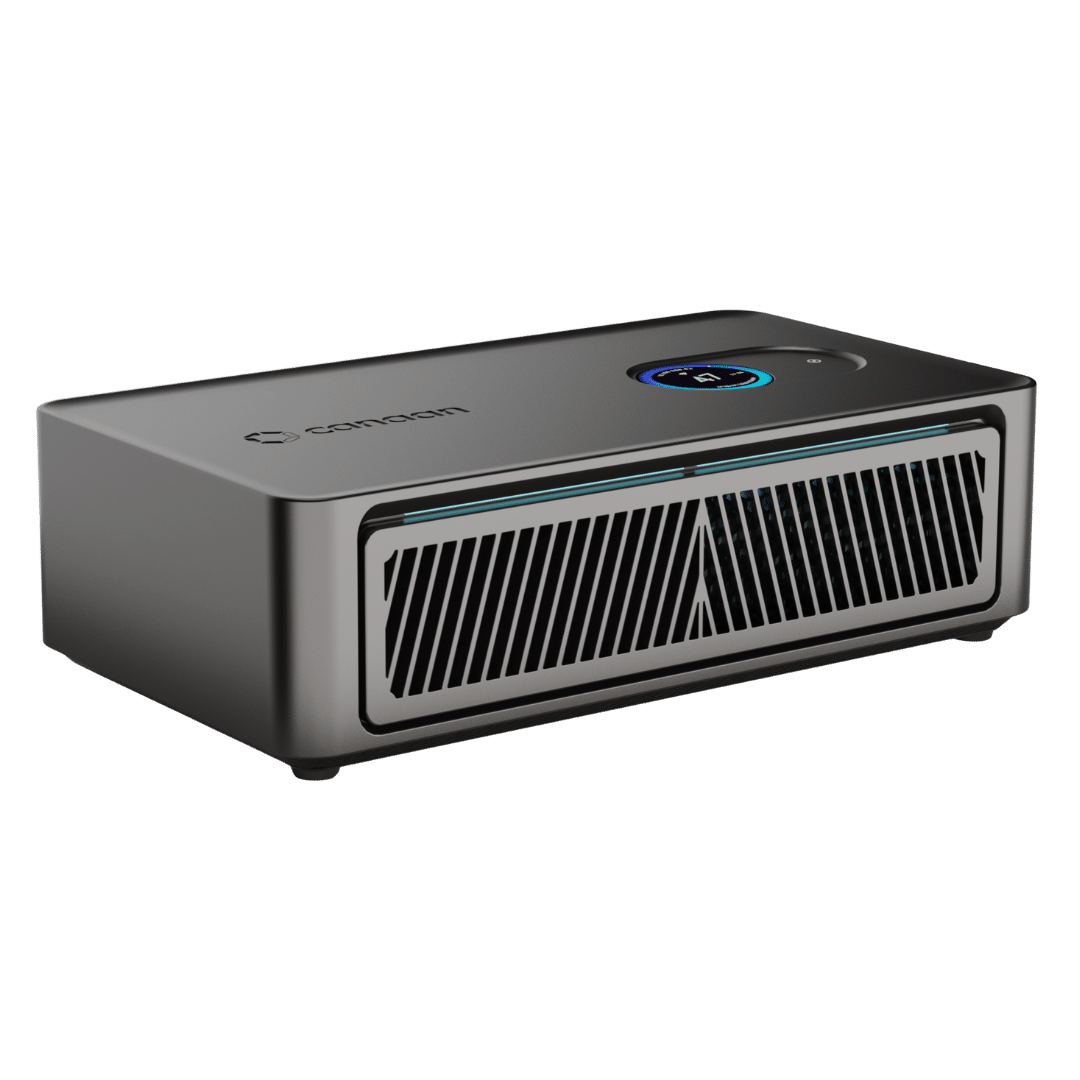
The device represents Canaan's vision for consumer-friendly mining: sophisticated enough to mine effectively, simple enough for anyone to use, and elegant enough to live openly in modern homes. If you want Bitcoin mining to be a conversation piece rather than something hidden away, and value dual-purpose functionality with premium industrial design, the Avalon Nano 3S delivers an experience no other miner currently offers.
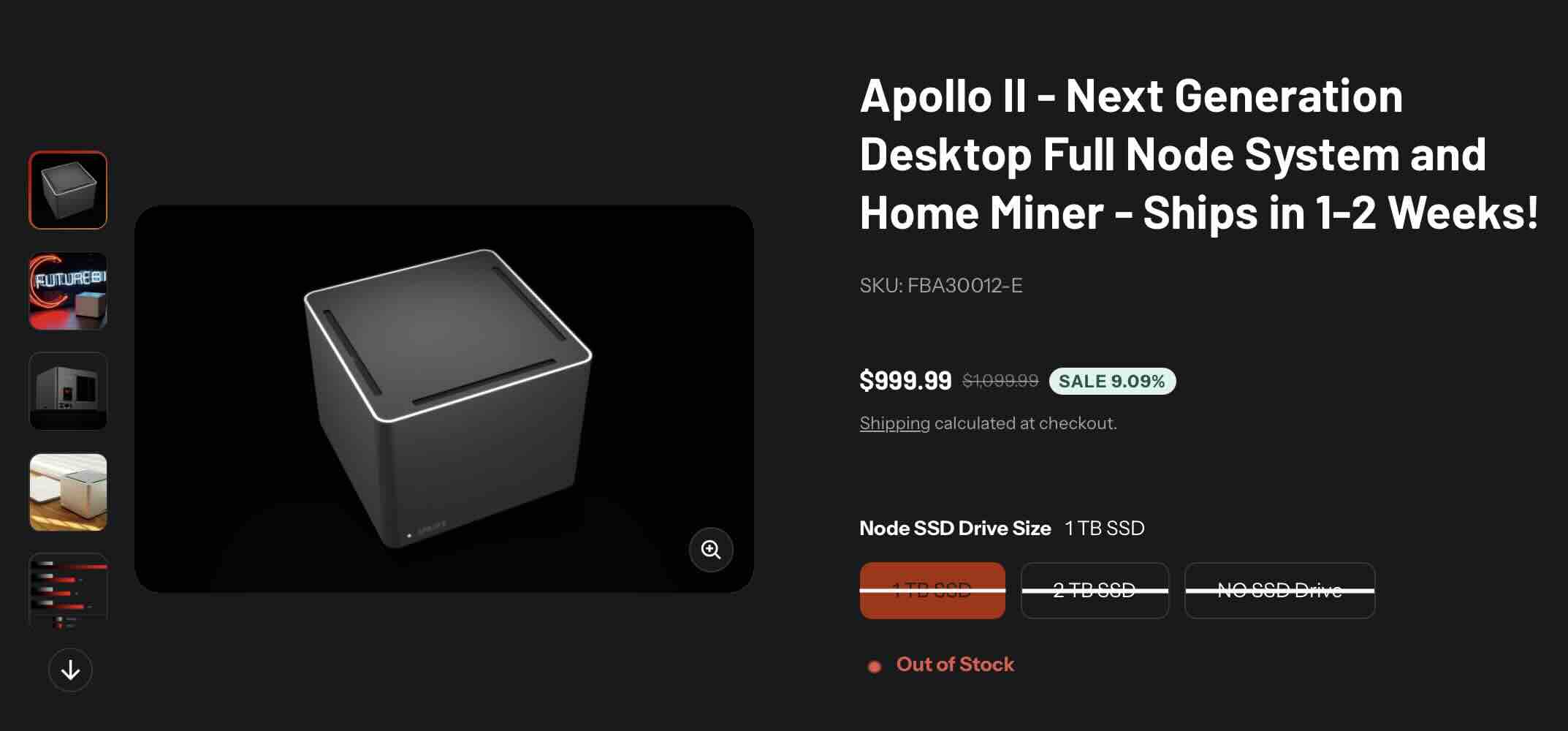
4. Futurebit Apollo II - Desktop Full Node System and Home Miner
Specifications Overview
| Parameter | Details |
|---|---|
| Hash Rate | 6-10 TH/s (Eco: ~6 TH/s, Turbo: ~9 TH/s, Custom: 10+ TH/s) |
| Power Consumption | ~450W maximum |
| ASIC Technology | Latest generation 5nm chips |
| CPU | 6-core ARM processor (Linux desktop system) |
| Storage | 1TB or 2TB NVMe SSD (optional no drive) |
| Node Software | Bitcoin Core full node (auto-sync) |
| Solo Pool | Built-in Stratum solo pool (Apollo OS 2.0) |
| Cooling | Custom vapor chamber heatsink |
| Noise Level | <40 dB (Eco mode) / ~55 dB (Turbo mode) |
| Power Supply | Integrated 100-240V (450W) |
| Case | High-grade single-piece aluminum |
| Included | Satscard wallet, 6ft power cable, getting started card |
| Approximate Price | $999.99 (1TB) / $1,149.99 (2TB) / $899.99 (no SSD) |
Why It's Excellent for Home Bitcoin Infrastructure
The Futurebit Apollo II represents something fundamentally different from every other device discussed in this guide, it's not just a miner, but a complete Bitcoin infrastructure system designed to restore the original vision of individual participation in every aspect of the Bitcoin network. Where early Bitcoin bundled wallet, full node, and mining into single software, the Apollo II delivers this trifecta in elegant hardware purpose-built for homes rather than data centers.
At its core, the Apollo II runs a complete Bitcoin Core full node on a powerful 6-core ARM processor with fast NVMe SSD storage. This isn't a lightweight pruned node or SPV wallet—it's the real deal, downloading and verifying the entire blockchain from genesis, validating every transaction according to consensus rules, and broadcasting verified transactions to the network. You're not trusting anyone else's servers or relying on third-party infrastructure. Your Apollo II becomes your personal gateway to Bitcoin's network, ensuring sovereignty over your transaction validation and blockchain access.
The mining component delivers 6-10 TH/s using latest-generation 5nm ASIC chips, cooled by custom-designed vapor chamber heatsinks that dissipate twice the heat output of the original Apollo while maintaining remarkably quiet operation in Eco mode. The aluminum enclosure isn't just aesthetic—it's functional engineering that enables sustained performance in residential environments where traditional miners would be intolerable. This is a device designed to sit on your desk running 24/7 without dominating your acoustic space.
The included Satscard wallet provides immediate functionality—you can mine directly to it straight out of the box without setting up external wallet infrastructure. For more sophisticated users, the ARM-based Linux desktop system supports installation of any Bitcoin wallet software or connection of hardware wallets.
You could run Sparrow Wallet, Electrum, or integrate Ledger/Trezor devices, the Apollo II becomes your Bitcoin operations center supporting whatever tools you prefer.
At $999.99 for the 1TB configuration, the Apollo II costs more than pure miners with comparable hash rates. You're not just buying hash power—you're buying a complete Bitcoin infrastructure system. The full node alone provides value through trustless transaction verification and network support. The ability to run your own solo pool adds functionality beyond personal mining. The wallet compatibility and desktop capabilities enable sophisticated Bitcoin operations from a single device.
The Apollo II serves specific audiences: sovereignty-focused Bitcoiners who want complete independence from third-party services, educators demonstrating how Bitcoin works end-to-end, serious home miners building comprehensive setups, and enthusiasts willing to pay premium prices for integrated solutions that "just work." If you value simplicity, completeness, and the philosophical alignment of running your own full node while mining, the Apollo II delivers unmatched cohesion.
 Nakamoto Builder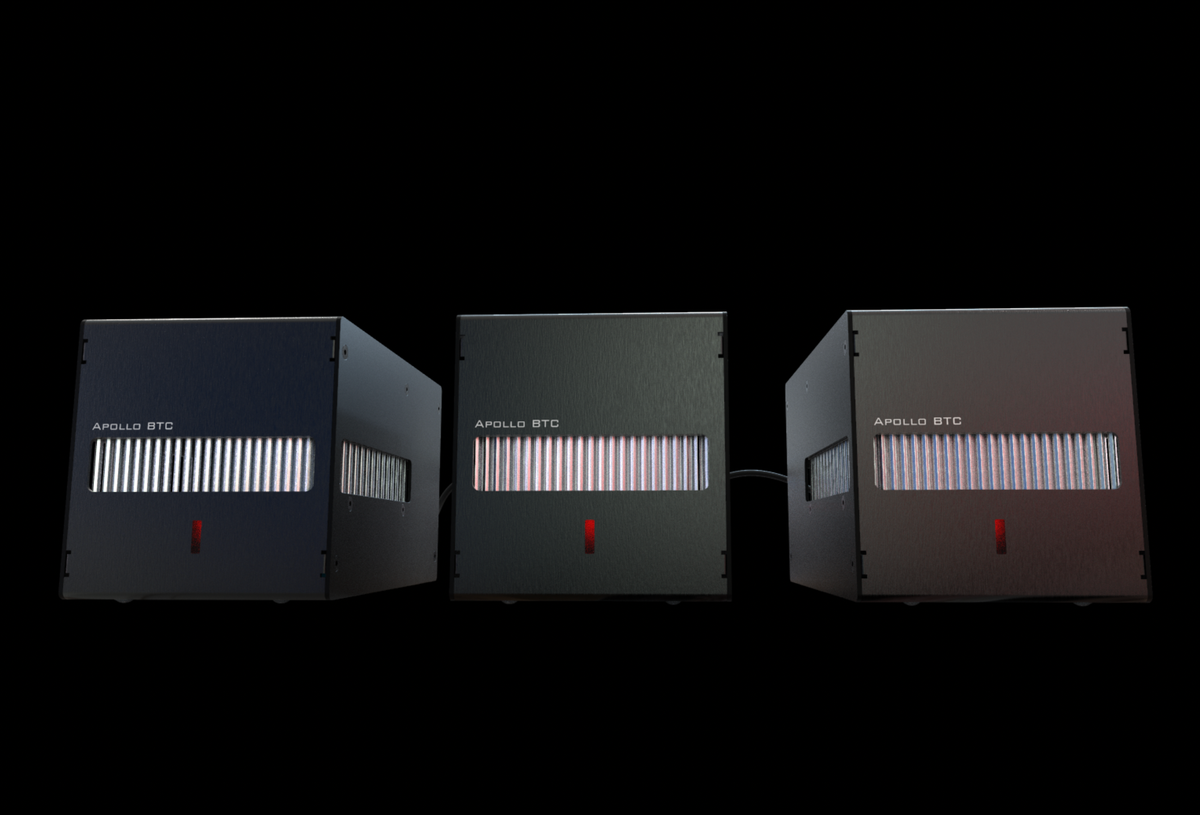
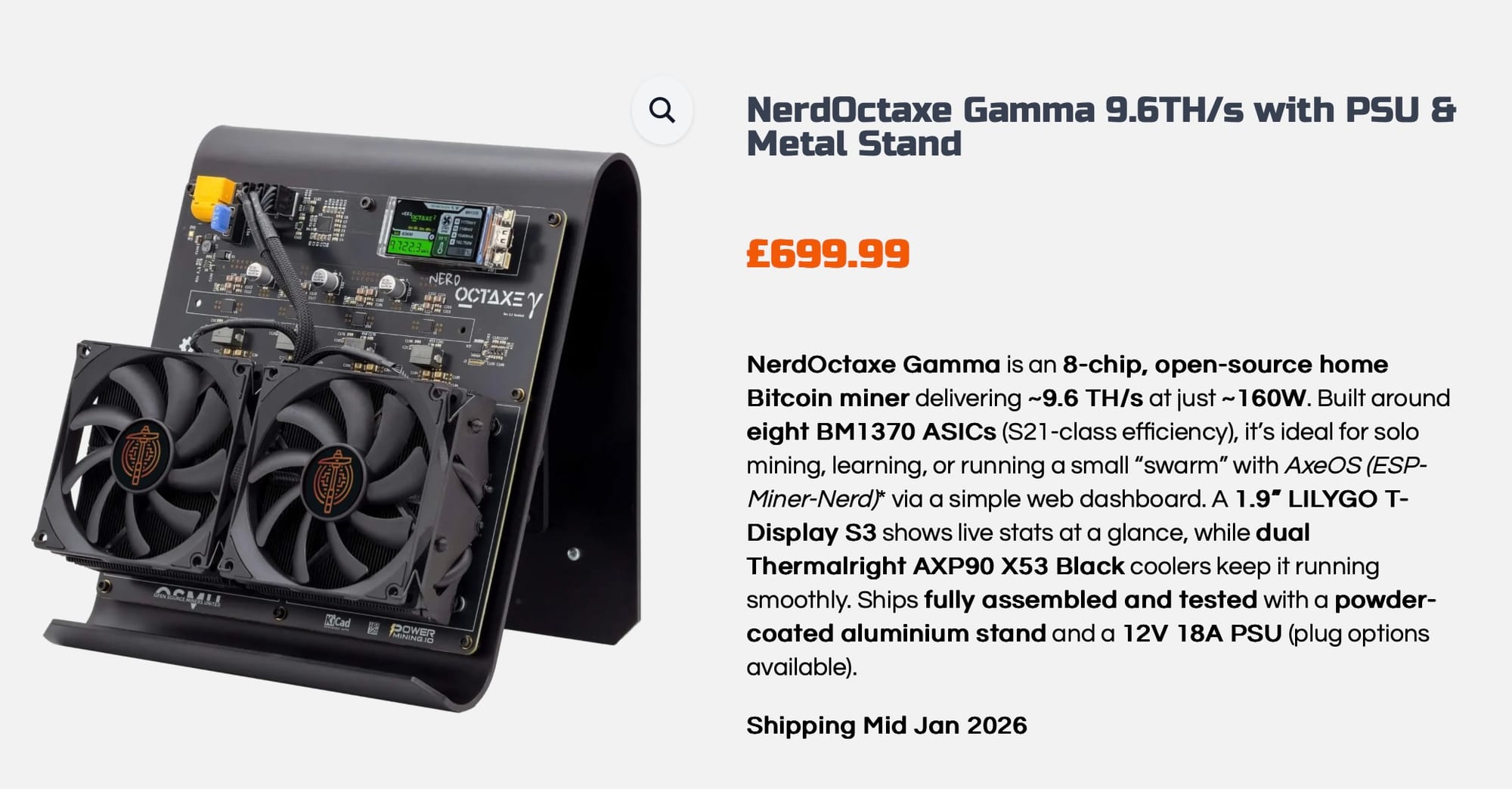
5. NerdOctaxe Gamma Bitcoin Miner (9.6 TH/s)
Specifications Overview
| Parameter | Details |
|---|---|
| Hash Rate | ~9.6 TH/s |
| Power Consumption | ~160W |
| Efficiency | ~16.7 J/TH |
| Chips | Eight Bitmain BM1370 ASICs (S21-class) |
| Cooling | Dual Thermalright AXP90 X53 Black low-profile coolers |
| Display | 1.9" LILYGO T-Display S3 color LCD with 2 buttons |
| Controller | ESP32 running AxeOS (ESP-Miner-Nerd) |
| Connectivity | Wi-Fi, USB-C for debug/maintenance |
| Power Input | 12V DC via included 12V 18A PSU |
| Form Factor | Compact PCB on black powder-coated metal stand |
| Approximate Price | £699.99 (~$875 USD) |
Why It's Excellent for Home Mining
The NerdOctaxe Gamma represents the flagship of the open-source home mining movement—a genuine powerhouse that bridges the gap between hobbyist miners and industrial equipment. With eight BM1370 ASIC chips from Bitmain's S21 series, this device delivers an impressive 9.6 TH/s while consuming just 160W, achieving approximately 16.7 J/TH efficiency that rivals much larger and more expensive mining hardware.
At 9.6 TH/s, the Octaxe provides meaningfully better odds for solo mining compared to single-chip or quad-chip devices. While finding a block remains statistically improbable, the probability improves roughly tenfold versus a 1 TH/s miner—transforming from "impossibly unlikely" to merely "extremely unlikely." For lottery miners who understand the odds but enjoy the possibility, this improvement matters psychologically even if probabilities remain astronomical.
At £699.99, it's not an impulse purchase—this is for committed home miners making deliberate investments in their mining infrastructure. However, compared to industrial options providing similar hash rates, the Octaxe delivers extraordinary value. Traditional 10 TH/s miners cost significantly more, consume more power, generate prohibitive noise, require 220V circuits, and can't sit on a desk. The Octaxe provides 96% of that hash rate while remaining genuinely home-compatible.
Comparison Table: Best Home Solo Mining Devices
| Device | Hash Rate | Power | Efficiency | Price | Noise Level | Best For | Link |
|---|---|---|---|---|---|---|---|
| Bitaxe Ultra (BM1366) | 0.9 TH/s | 15W | 16.7 J/TH | $150-$250 | Near silent | Beginners, education, ultra-low power | View Details |
| Bitaxe Supra (BM1368) | 1.2 TH/s | 18W | 15 J/TH | $180-$280 | Near silent | Best efficiency per watt | View Details |
| Bitaxe 602 Gamma | 1.07-1.84 TH/s | 17.8-35W | 15 J/TH | $104.98 | 43-50 dB | Best value, overclocking | Solo Satoshi |
| Apollo BTC (Futurebit) | 3.5 TH/s | 200W | 57 J/TH | $800-$1,200 | 40-45 dB | Complete package, Bitcoin node | Futurebit |
| Bitaxe Hex | 5.4 TH/s | 108W | 20 J/TH | $350-$450 | Quiet | Multi-chip power, Bitaxe ecosystem | Community builds |
| Canaan Avalon Nano 3S | 3.1-6.0 TH/s | 66-140W | 21.2-23.3 J/TH | $299.99 | 29-36 dB | Design-focused, space heater, living room | Solo Satoshi |
| NerdQaxe++ Rev 6.1 | 4.82-6+ TH/s | 70.6-103W | 14.66-15.65 J/TH | $399.99-$419.98 | Moderate | Quad-chip serious mining | Solo Satoshi |
| NerdOctaxe Gamma | 9.6 TH/s | 160W | 16.7 J/TH | £699.99 (~$875) | Moderate | Maximum home hash rate, flagship | The Solo Mining Co |
Efficiency Rankings (Best to Least)
- NerdQaxe++ Rev 6.1 - 14.66 J/TH (stock)
- Bitaxe Supra - 15 J/TH
- Bitaxe 602 Gamma - 15 J/TH
- Bitaxe Ultra - 16.7 J/TH
- NerdOctaxe Gamma - 16.7 J/TH
- Bitaxe Hex - 20 J/TH
- Avalon Nano 3S - 21.2-23.3 J/TH
- Apollo BTC - 57 J/TH
How to Start Solo Mining at Home: Step-by-Step Guide
Setting up a home solo mining operation is significantly simpler than industrial mining, but still requires some technical steps. Follow this guide to get your device running and participating in the Bitcoin network.
Step 1: Choose and Acquire Your Device
Select a device based on your goals, budget, and technical comfort level. For absolute beginners, the Avalon Nano 3 or Bitaxe Ultra provide easy entry points. For more serious enthusiasts, the Apollo BTC or Bitaxe Hex offer higher hash rates with manageable complexity.
Purchase from reputable vendors. For Bitaxe devices, check the official GitHub repository for recommended sellers, as these open-source devices are manufactured by various community members. For Apollo units, buy directly from Futurebit. For Avalon products, purchase from Canaan's authorized distributors. Avoid suspiciously cheap offers on unknown marketplaces, as counterfeit or defective units exist.
Step 2: Set Up Your Bitcoin Node or Pool Connection
True solo mining requires running a Bitcoin full node. If you have the technical capability and disk space (currently over 500GB), running Bitcoin Core on a local computer or dedicated device like a Raspberry Pi provides the most authentic experience. Your miner connects to your node, and if you find a block, you receive the entire reward directly.
Alternatively, lottery mining through a solo pool like ckpool's solo.ckpool.org provides a middle ground. You mine independently but use the pool's infrastructure to submit block solutions. If you find a block, you receive 98% of the reward, with 2% going to the pool operator. This approach eliminates the need to run a full node while maintaining the solo mining experience.
Some miners also join FPPS or PPS pools to receive consistent small payments based on submitted shares rather than waiting for unlikely block discoveries. While this abandons true solo mining, it provides regular feedback and tiny BTC accumulation. Many home miners experiment with all three approaches over time.
Step 3: Physical Setup and Power Connection
For Bitaxe devices, you'll need a power supply providing appropriate voltage and amperage via the barrel connector or USB-C depending on model. Standard phone chargers often suffice for lower-power models. Ensure adequate airflow around the device, though cooling requirements are minimal. Many users 3D print custom stands or enclosures for aesthetic appeal and improved cooling.
For the Avalon Nano 3, connect it to any USB-C power source. A computer USB port, phone charger, or power bank all work fine. The device requires so little power that even a portable battery can run it for hours.

Step 4: Network Configuration
Most home mining devices connect via WiFi for convenience. Using the device's configuration interface (accessible via web browser for Bitaxe or mobile app for Nano 3), connect to your home network. Some devices also support Ethernet for more stable connectivity, though WiFi typically suffices given mining's minimal bandwidth requirements.
Configure a static IP address in your router for the device to ensure you can always access its interface. This prevents the device from receiving a different IP after router reboots, which would require re-discovery.
Step 5: Configure Mining Settings
Access the device's web interface by typing its IP address into a web browser. For Bitaxe devices, you'll see the AxeOS interface. For Apollo, you'll access its custom interface. Navigate to the mining configuration section and enter the following information:
- Pool URL: If solo mining through ckpool, use stratum+tcp://solo.ckpool.org:3333. For other pools, consult their documentation. If mining to your own Bitcoin node, use your local node's stratum address.
- Wallet Address: Your Bitcoin address where block rewards will be sent if you find a block. Use a secure address from your hardware wallet or trusted software wallet. Verify this address extremely carefully as it cannot be changed after finding a block.
- Worker Name: A identifier for this specific device if you plan to run multiple miners. Use something descriptive like 'bitaxe-office' or 'apollo-desk'.
Save the configuration and start mining. Within seconds, the device should connect to the pool or node and begin submitting shares. The web interface will display real-time statistics including hash rate, share submission rate, and uptime.
Step 6: Monitor and Maintain
Check your device periodically to ensure it's running properly. Most home mining devices are extremely reliable and can run continuously for months without intervention. However, occasional monitoring helps identify issues like network disconnections or firmware bugs.
The AxeOS firmware for Bitaxe devices includes a built-in notification system that can alert you via webhook if the device goes offline or experiences errors. Setting this up provides peace of mind without requiring constant manual checking.
For devices with fans, clean accumulated dust every few months to maintain cooling efficiency. For passively cooled devices like the Nano 3, no maintenance is required beyond ensuring adequate ambient ventilation.
Keep firmware updated when new versions are released. The open-source community continuously improves efficiency and adds features. Updating is typically as simple as uploading a new firmware file through the web interface.
Understanding Solo Mining Reality: Odds and Expectations
Let's address the elephant in the room: the odds of finding a block with home mining equipment are extraordinarily low. With the Bitcoin network's current difficulty, a device hashing at 1 TH/s has approximately a 1-in-2000-years chance of finding a block. For a 0.5 TH/s device, it's roughly 1-in-4000 years. For a 5 TH/s device, about 1-in-400 years.
However, these are statistical averages. You could find a block on your first day, or never find one despite mining for decades. This lottery aspect appeals to many solo miners. Several documented cases exist of home miners with sub-10 TH/s hash rates finding blocks, leading to celebrations across the mining community.
The current block reward is 3.125 BTC plus transaction fees, typically totaling around 3.3-3.5 BTC per block, worth over $100,000 at current prices. Finding a single block would provide extraordinary returns on a modest investment in home mining equipment. This possibility, however remote, motivates many solo miners to keep their devices running.
From a pure financial perspective, the electricity costs will exceed expected returns by orders of magnitude. A Bitaxe consuming 15W costs roughly $1.50 per month in electricity at average US rates. Over ten years, that's $180 in electricity for equipment costing $200. You're extremely unlikely to find a block, meaning you'll spend $380 on something that produces no financial return.
But focusing solely on financial ROI misses the point of home solo mining. The value comes from participation, learning, supporting decentralization, and the engaging possibility of an unlikely win. Many home miners consider the cost a hobby expense, similar to collecting, gaming, or other recreational activities. The difference is that mining provides an infinitesimally small but non-zero chance of a life-changing payout.
The Home Mining Community and Culture
Home mining has developed a vibrant community culture distinct from industrial mining. Discord servers, Reddit communities, and forums dedicated to Bitaxe, Apollo, and home mining generally provide spaces where enthusiasts share configurations, custom firmware, 3D printed enclosures, and modifications.
The open-source nature of projects like Bitaxe encourages experimentation and contribution. Community members design improved cooling solutions, create monitoring dashboards, write optimization guides, and develop new firmware features. Contributing to these projects provides deeper understanding of Bitcoin's technical foundations while helping improve the ecosystem for all participants.
When someone in the community finds a block with home equipment, celebrations erupt across social media and mining forums. These rare occurrences validate the hobby and inspire others to keep mining. The community maintains lists and databases tracking home mining block discoveries, creating a sense of shared achievement.
Many home miners integrate their devices into broader cryptocurrency education efforts. Teachers use them in classrooms, content creators film unboxing and setup videos, and enthusiasts give them as gifts to introduce friends and family to Bitcoin. This grassroots education contributes to Bitcoin adoption beyond just securing the network.
Advanced Topics for Enthusiasts
Overclocking and Underclocking
Most home mining devices support voltage and frequency adjustments for overclocking or underclocking. Overclocking increases hash rate at the cost of higher power consumption and heat generation. Underclocking reduces power consumption with lower hash rates, potentially improving efficiency.
Experimentation helps find the optimal balance for your situation. If electricity is expensive, underclocking improves efficiency. If you want maximum lottery tickets for finding blocks, overclocking provides more hash rate. The Bitaxe community has extensively documented overclocking configurations achieving 1.2+ TH/s on Supra models at the cost of increased power draw and requiring improved cooling.


Custom Firmware and Modifications
The open-source nature of devices like Bitaxe enables custom firmware development. Alternative firmware versions offer different features, performance characteristics, or user interfaces. Some focus on maximum efficiency, others on maximum hash rate, and still others on additional monitoring and integration capabilities.
Hardware modifications include improved heat sinks, better fans, and custom power supplies for more stable overclocking. Advanced users design custom PCBs combining multiple chips with improved power delivery or cooling solutions. These modifications require soldering skills and electronic knowledge but push the boundaries of what's possible with home mining hardware.
Integration with Home Automation
Tech-savvy miners integrate mining devices into home automation systems. Using Home Assistant, Node-RED, or similar platforms, you can create automations based on mining statistics, power consumption, or network status. Examples include receiving notifications when hash rate drops, automatically adjusting mining intensity based on electricity pricing tiers, or displaying real-time stats on home dashboards.
Some miners use smart plugs to schedule mining during off-peak electricity hours or integrate with solar panels to mine exclusively on excess renewable energy. These integrations transform home mining from a standalone hobby into part of a broader smart home ecosystem.
Conclusion: Embracing the Home Mining Journey
Home solo mining in 2024 represents participation rather than profit. The devices we've discussed offer realistic ways to mine Bitcoin at home without transforming your residence into an industrial facility. They're quiet, efficient, and designed for enthusiasts who value the experience over guaranteed financial returns.
Choosing the right device depends on your goals. If you want the most accessible entry point, start with an Avalon Nano 3 or Bitaxe Gamma. For more serious participation with better block-finding odds while remaining genuinely home-friendly, consider the NerdQaxe++. Each provides different balances of cost, hash rate, and user experience.
 edotalin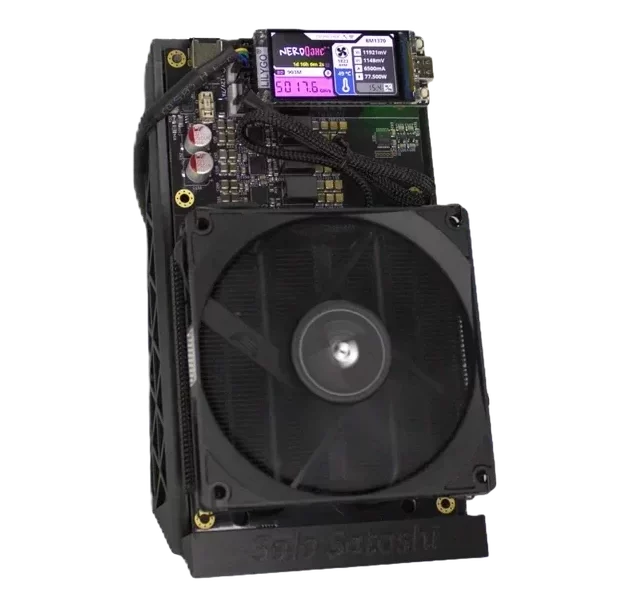
Remember that finding a block with home equipment is extraordinarily unlikely. The electricity costs will exceed expected returns by massive margins. But if you view home mining as a hobby, educational tool, or way to participate in Bitcoin's network while maintaining a lottery ticket for an unlikely but possible windfall, it becomes rewarding beyond simple financial calculations.
The home mining community welcomes newcomers and celebrates every block discovery by small miners. Whether you run a single Bitaxe on your desk or build a collection of Apollo units in your home office, you're contributing to Bitcoin's decentralization and participating directly in the network that enables the entire cryptocurrency ecosystem.
Start small, learn continuously, and enjoy the process. The journey of home mining provides insights into Bitcoin's technical foundations that passive investing cannot match. And who knows, you might be one of the lucky few who experiences the exhilaration of finding a block with your home setup, joining the elite ranks of solo miners who beat the astronomical odds.
Recommended Retailers
- Solo Satoshi (USA) - solosatoshi.com : Ships globally, excellent support
- The Solo Mining Co (UK) - thesolomining.co - UK/Europe shipping, Bitcoin accepted
- Futurebit - futurebit.io - Official Apollo manufacturer
- Bitaxe Community - Check official GitHub for authorized sellers
