


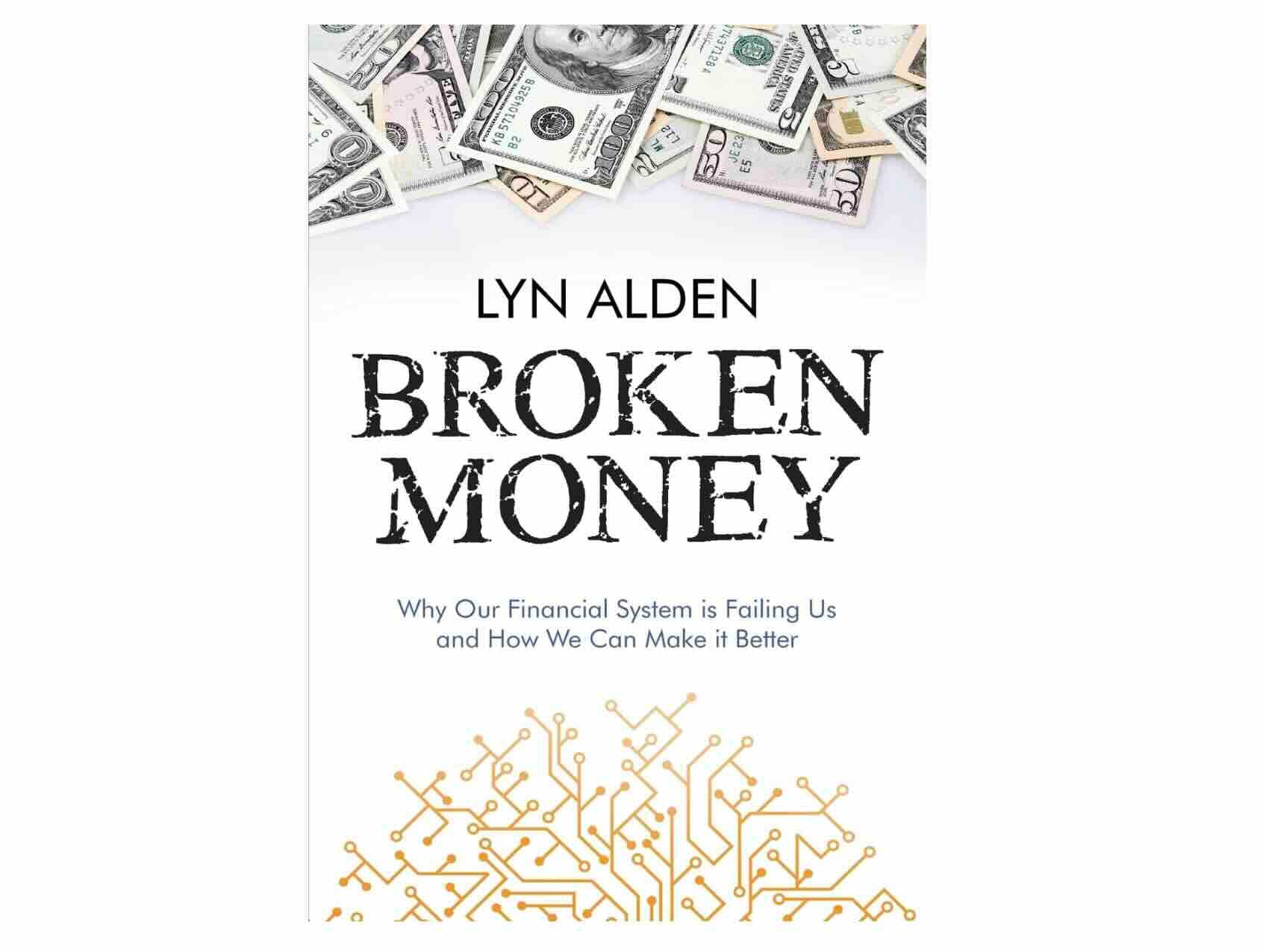
Lyn Alden's Broken Money is more than just another book about Bitcoin. It's a comprehensive examination of how money has evolved throughout human history, why our current monetary system is fundamentally broken, and why decentralized digital currencies like Bitcoin represent a potential solution.
Whether you're a skeptic, a curious observer, or already convinced about Bitcoin, this book offers something invaluable: a deep, rigorous understanding of money itself.
Most importantly, Alden doesn't simply advocate for Bitcoin. She builds her case methodically, starting with first principles about what money is, how it has worked throughout history, and the specific problems plaguing modern monetary systems. By the time she introduces Bitcoin, readers understand why it matters, not just that it exists.
The Main Concepts That Define Broken Money
1. Money Is a Ledger Technology
Alden's foundational insight is that money isn't just coins or paper—it's fundamentally a ledger system that tracks who owns what. Throughout history, societies have used different technologies to maintain this ledger: clay tablets, tally sticks, precious metals, paper currency, and now digital databases. Each technological advancement changed how money functioned and who controlled it.
Understanding money as technology, rather than an abstract concept, helps readers grasp why innovations in ledger-keeping—like blockchain—are so significant. It's not just a new type of money; it's a new way of maintaining the fundamental record of economic value.
2. The Triffin Dilemma and Global Reserve Currencies
One of the book's most compelling sections explains the Triffin Dilemma, which describes the inherent contradiction in having a national currency serve as the global reserve currency. The United States must run persistent trade deficits to supply the world with dollars, but doing so eventually undermines confidence in the currency itself.
Alden traces how this dynamic has played out through the Bretton Woods system, the Nixon Shock of 1971 (when the dollar was disconnected from gold), and the subsequent decades of fiat currency dominance. She shows how this structural problem creates cycles of boom, bust, and monetary debasement that harm savers and workers while benefiting those closest to the money creation process.
3. The Cantillon Effect
The Cantillon Effect, named after 18th-century economist Richard Cantillon, describes how new money doesn't enter the economy evenly. Those who receive newly created money first benefit at the expense of those who receive it last. In modern terms, when central banks create money through quantitative easing, financial institutions and asset holders benefit first, while wage earners see their purchasing power diluted.
This concept helps explain growing wealth inequality and why traditional inflation metrics often fail to capture the real impact of monetary expansion. Asset prices inflate rapidly while wages stagnate, creating a wealth transfer from labor to capital.
4. The Evolution from Commodity Money to Fiat Currency
Alden provides a masterful historical overview of how money evolved from commodity-backed systems (gold, silver) to representative money (paper backed by gold) to pure fiat currency (money backed only by government decree). Each transition concentrated more power in the hands of governments and central banks while reducing the individual's ability to preserve wealth.
She explains how technological constraints once limited governments' ability to debase currency—when money was gold or silver, you couldn't simply print more. But modern digital fiat currencies can be created with keystrokes, removing previous constraints on monetary expansion.
5. Bitcoin as a Monetary Innovation
After establishing why current monetary systems are problematic, Alden introduces Bitcoin as a technological solution. She explains how Bitcoin combines properties of commodity money (fixed supply, no central authority) with digital efficiency (instant global transfers, divisibility, verifiability).
Critically, she doesn't present Bitcoin as perfect or without challenges. Instead, she analyzes its properties objectively: absolute scarcity through its 21 million coin cap, decentralization through proof-of-work mining, censorship resistance through its distributed network, and verifiability through transparent blockchain records.
Why Bitcoiners Love This Book
It Provides Intellectual Rigor and Historical Context
Most Bitcoin advocates can explain what Bitcoin is, but Alden provides the comprehensive historical and economic framework that explains why Bitcoin matters. She doesn't rely on rhetoric or hype; she builds her case systematically with historical examples, economic theory, and data.
For bitcoiners, this book serves as the intellectual foundation they can point others to. Instead of struggling to explain complex monetary economics, they can simply recommend Alden's comprehensive treatment.
She's Not a Bitcoin Maximalist
Paradoxically, one reason bitcoiners appreciate the book is that Alden isn't a dogmatic maximalist. She approaches Bitcoin analytically, acknowledging its limitations and challenges. This objectivity makes her arguments more credible to skeptics, which bitcoiners value because it helps them persuade others.
She discusses Bitcoin's scalability challenges, environmental concerns, regulatory risks, and potential vulnerabilities without dismissing them. This honest assessment strengthens rather than weakens the case for Bitcoin because it addresses real concerns rather than ignoring them.
It Connects Macroeconomics to Personal Finance
Alden brilliantly connects abstract monetary policy to concrete personal impacts. She shows how central bank policies affect ordinary savers, why traditional financial advice often fails in inflationary environments, and how monetary debasement creates a hidden tax on productive work.
This connection helps bitcoiners articulate why Bitcoin isn't just an interesting technology or speculative investment—it's a potential solution to real economic problems that affect real people. When your savings lose purchasing power, when your wages can't keep pace with housing costs, when your retirement planning assumes stable currency values that don't materialize—these aren't abstract problems. Alden shows how they stem from fundamental monetary system flaws.
She Addresses Common Criticisms Preemptively
Bitcoiners face constant criticism: Bitcoin wastes energy, it's too volatile, it's used by criminals, it's not backed by anything, it can't scale, governments will ban it. Alden addresses each critique seriously, providing context, comparing Bitcoin to existing systems, and explaining tradeoffs.
For instance, on energy use, she explains Bitcoin's energy consumption in comparison to gold mining and the traditional banking system, discusses Bitcoin's increasing use of renewable energy, and explains how proof-of-work's energy requirement isn't wasteful but essential to the system's security. This gives bitcoiners thoughtful responses rather than defensive reactions.
It Legitimizes Bitcoin in Traditional Finance Circles
Lyn Alden is a respected investment analyst with a background in electrical engineering and a master's in engineering management. Her credibility in traditional finance and her methodical analytical approach lend legitimacy to Bitcoin advocacy. When she explains Bitcoin, it carries weight with audiences who might dismiss arguments from cryptocurrency enthusiasts.
Bitcoiners appreciate this because it helps move Bitcoin from the fringe to mainstream consideration. Having a serious analyst make a serious case matters for adoption.
Who Should Read This Book?
Bitcoin skeptics will find a serious, data-driven case that challenges their assumptions about cryptocurrency being purely speculative or technological novelty. Alden addresses skeptical concerns directly and honestly.
Bitcoin curious readers get the comprehensive foundation they need to understand not just what Bitcoin is, but why it exists and what problems it attempts to solve. The book provides context that makes Bitcoin make sense.
Bitcoin advocates gain the intellectual framework and historical knowledge to articulate their views more effectively. They can point to specific chapters when explaining concepts to others.
Finance professionals receive a thorough treatment of monetary history and macroeconomics that contextualizes Bitcoin within broader financial evolution. The book speaks their language while introducing new concepts.
Anyone concerned about savings and wealth preservation will understand how monetary policy affects personal finances and what options exist beyond traditional savings and investment approaches.
Conclusion: Much more Than a Bitcoin Book
Broken Money succeeds because it's primarily a book about money, not Bitcoin. By the time Alden introduces Bitcoin, readers understand why alternative monetary systems matter. They've learned about the Triffin Dilemma, the Cantillon Effect, monetary debasement, and the evolution of ledger technologies.
For bitcoiners, this approach is perfect. It provides the comprehensive education needed to understand not just Bitcoin, but the entire monetary context that makes Bitcoin significant. It's the book they can confidently recommend to anyone asking, "Why Bitcoin?" knowing that it will provide thorough, honest, rigorous answers.
Whether you finish the book convinced about Bitcoin or still skeptical, you'll emerge with a significantly deeper understanding of money, monetary policy, and the economic forces shaping modern life. And in an era of unprecedented monetary experimentation, that understanding itself is valuable—perhaps more valuable than any single investment thesis.
 Nakamoto Builder
—
Read Broken Money to understand money itself. Bitcoin's role in that understanding will become clear along the way.
