


In Mossel Bay, South Africa, an innovative project is proving that Bitcoin isn't just for traders and tech bros. It's a lifeline for communities locked out of traditional finance.
While regulators debate crypto policy in Washington and Brussels, and while Wall Street experiments with stablecoins, a small coastal community in South Africa is quietly demonstrating what Bitcoin was actually designed to do: provide financial access to people who need it most.
Welcome to Bitcoin Ekasi, where surf lessons, financial literacy, and cryptocurrency converge in one of the world's most unexpected Bitcoin adoption stories.
Building Through Resilience
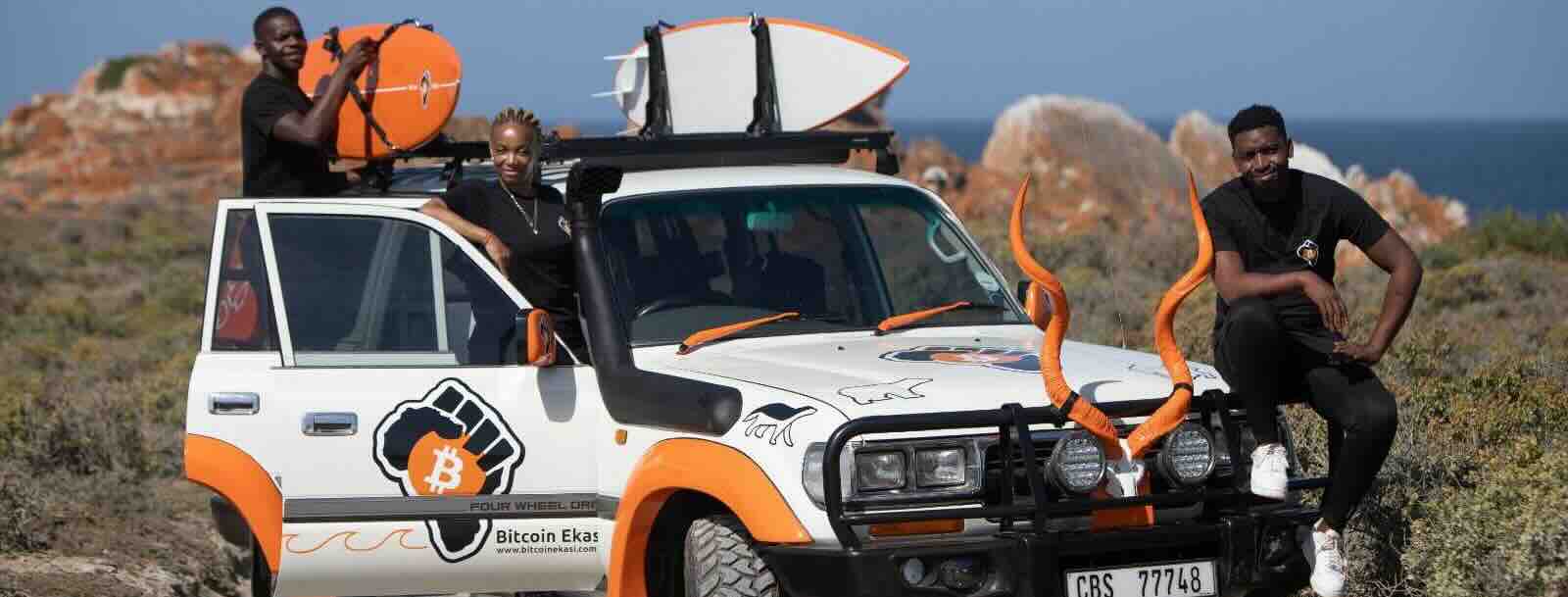
The story begins with Jenya Zhivaleva, a Russian entrepreneur, and her South African husband Hermann Vivier. In 2010, the couple founded Unravel Surf Travel, a tourism agency with a twist. Instead of the typical safari-and-beach package, they wanted visitors to experience authentic South African culture by surfing alongside kids from local townships.
For those unfamiliar, townships are impoverished urban settlements that were originally designated for non-white residents during apartheid. Though apartheid ended decades ago, these communities remain economically isolated, with limited access to clean water, electricity, education and critically, banking services.
Rather than offer voyeuristic "poverty tourism," Vivier and Zhivaleva created The Surfer Kids, a nonprofit teaching children from these townships how to surf. The program ran five days a week, partnering with local schools to engage kids as young as eight. But this wasn't just about catching waves, it was about teaching perseverance, discipline, and resilience through sport.
Tourists who visited fell in love with the project and wanted to help. Donations started flowing in. Everything seemed to be working smoothly until two distant crises changed everything.
When Banks Fail, Bitcoin Rises
In 2013, Cyprus experienced a catastrophic banking crisis. Following Greece's debt meltdown, the tiny Mediterranean island, home to many wealthy Russian expats, faced financial collapse. The European Central Bank, IMF, and Russia agreed to a bailout, but with brutal conditions: deposits over €100,000 were taxed or outright confiscated to balance the books.
Thousands of people saw their life savings vanish overnight. Accounts were frozen. Fortunes disappeared.
Many of Unravel Surf Travel's clients were Russian expats living in Cyprus. After the crisis, they suddenly couldn't access their money to pay for trips. Some turned to Bitcoin out of desperation, and asked if the agency would accept it.
Vivier and Zhivaleva said yes.
Then in early 2015, a Ukrainian couple booked a trip but couldn't wire payment due to sanctions and banking restrictions following Russia's invasion of Crimea. Once again, Bitcoin saved the day. What started as crisis management gradually became standard practice. The agency began accepting more and more Bitcoin payments, building a reputation in the crypto community as early adopters with a social mission.
Bitcoin Beach Comes to South Africa
Fast forward to 2019. Hermann Vivier heard about an experimental project in El Zonte, El Salvador, called Bitcoin Beach. The concept was elegant: create a circular, local economy powered entirely by Bitcoin.
It was an epiphany. Vivier realized he could do the same thing in Mossel Bay's townships, centered around The Surfer Kids program, which now served about 40 children.
He wrote an article for Bitcoin Magazine outlining his vision. Donations in Bitcoin started pouring in. Bitcoin Ekasi, "ekasi" means "township" in Zulu, was born.
#Bitcoin is an incredible tool to help people make progress, but on its own, it won't succeed. Not without products that truly understand the people who need it most.
— Bitcoin Ekasi (@BitcoinEkasi) August 8, 2024
We were one of the first to test @fedibtc almost two years ago. We've seen the care they take in building with… pic.twitter.com/EeNuHqguEX
Building an Economy, One Satoshi at a Time
The first challenge? Convincing the surf coaches. Luthando, the head instructor, thought Bitcoin was a scam. It took two months of persuasion before he agreed to try it. Eventually, all the coaches came around and began receiving their salaries exclusively in Bitcoin.
But paying people in Bitcoin only works if they can spend it. The team needed local merchants on board.
After three months, two small shops, really just corner stores selling basic necessities, agreed to accept Bitcoin. Then a third joined. The circuit was complete: donations came in as Bitcoin, coaches received Bitcoin salaries, they spent it at local shops, and merchants could either keep the Bitcoin or convert it to South African rand.
To ease the transition, Bitcoin Ekasi initially used gift card platforms like Bitrefill, allowing people to spend Bitcoin at major retailers. But over time, locals began to see Bitcoin's real advantages.
The Power of Savings
One benefit caught everyone off guard: the ability to save money.
When cash is your only option and you live in a shanty built from scrap materials, saving is nearly impossible. Cash gets stolen, lost, or borrowed by family members who need it urgently. Where do you hide money in a makeshift home with no locks?
With a Bitcoin wallet on their phones, the coaches and merchants suddenly had a secure way to set aside funds for the future. For people who'd been shut out of banking their entire lives, this was revolutionary.
As word spread through social media and the global Bitcoin community, donations increased. The project expanded.
Empowering the Next Generation
Children in the program started receiving small amounts of Bitcoin, just a few satoshis, as rewards. The goal wasn't to pay them, but to teach them how to download a wallet, make transactions, and manage digital money. Kids used their Bitcoin pocket money to buy ice cream, candy, and snacks from participating vendors.
Bitcoin Ekasi hired a full-time educator to teach township residents about Bitcoin. Shops that accepted it received special signage. The project hired lifeguards, a first for the area, to patrol the beach and prevent drownings. A head coach was brought on to support the original instructors.
Everyone got paid in Bitcoin.
A Proof of Concept for the World
Today, Bitcoin Ekasi has enrolled 20 children in its program and convinced at least 10 local businesses to accept Bitcoin payments. The organization recently celebrated its first anniversary and opened the Bitcoin Ekasi Center, offering financial literacy training, basic math, and English lessons for kids, plus Bitcoin fundamentals for adults.
When asked why he does this work, Hermann Vivier's answer is simple but profound:
"If you're a Bitcoiner, you know why. But beyond the obvious benefits to the local community, this is a proof of concept. There are very few places in the world where people live in conditions as desperate as this. Unemployment is astronomically high.
💥Celebrating South African Hermann Vivier (@vryfokkenou) as our #3 Most Impactful African Bitcoiner of 2025! 🇿🇦
— African Bitcoiners ⚡ (@afribitcoiners) December 5, 2025
Our #3 is pioneering Hermann Vivier, founder of Bitcoin Ekasi, creating thriving township circular economies that empower communities with practical Bitcoin adoption… pic.twitter.com/lObxmrYFNS
Illiteracy is widespread. Most homes are informal structures built from salvaged materials. Most don't have running water, toilets, or hot water inside. If Bitcoin can work here and be organically adopted in a setting like this, there's no reason it can't be adopted anywhere."
The Bigger Picture
Bitcoin Ekasi is a drop in the ocean compared to the massive challenges facing South Africa's townships. Donations alone won't lift people out of poverty. But education, financial literacy, the ability to save, and participation in a universal monetary system? That changes the game.
Bitcoin doesn't discriminate based on race in a country still scarred by apartheid. It doesn't require a credit score, a permanent address, or government-issued ID. Kids, seniors, women, small business owners rejected by traditional banks, everyone can use it.
The project has attracted support from across the crypto industry. Paxful, a peer-to-peer exchange operating throughout Africa, has backed the initiative. As CEO Ray Youssef (cf Noones ) put it in a press release: "Our society is centered on money: who has it, how to get it, how to grow it, how to use it.
For millions who don't have access to banks and credit, Bitcoin is a real solution to participate in these conversations. That's why local education is essential, and why Paxful is committed to prioritizing Bitcoin's purpose over its price."
What's Next?
Vivier and Zhivaleva aren't claiming they'll change the world with one small circular economy. But they are proving that financial inclusion through Bitcoin and cryptocurrency isn't just possible, it works.
Their dream? That projects like Bitcoin Ekasi and Bitcoin Beach multiply across the globe, creating pockets of economic empowerment wherever traditional finance has failed people.
For now, in a small township overlooking the Indian Ocean, kids are learning to surf, merchants are learning to save, and an entire community is discovering that they don't need permission from banks to participate in the economy.
They just need a smartphone and an internet connection.
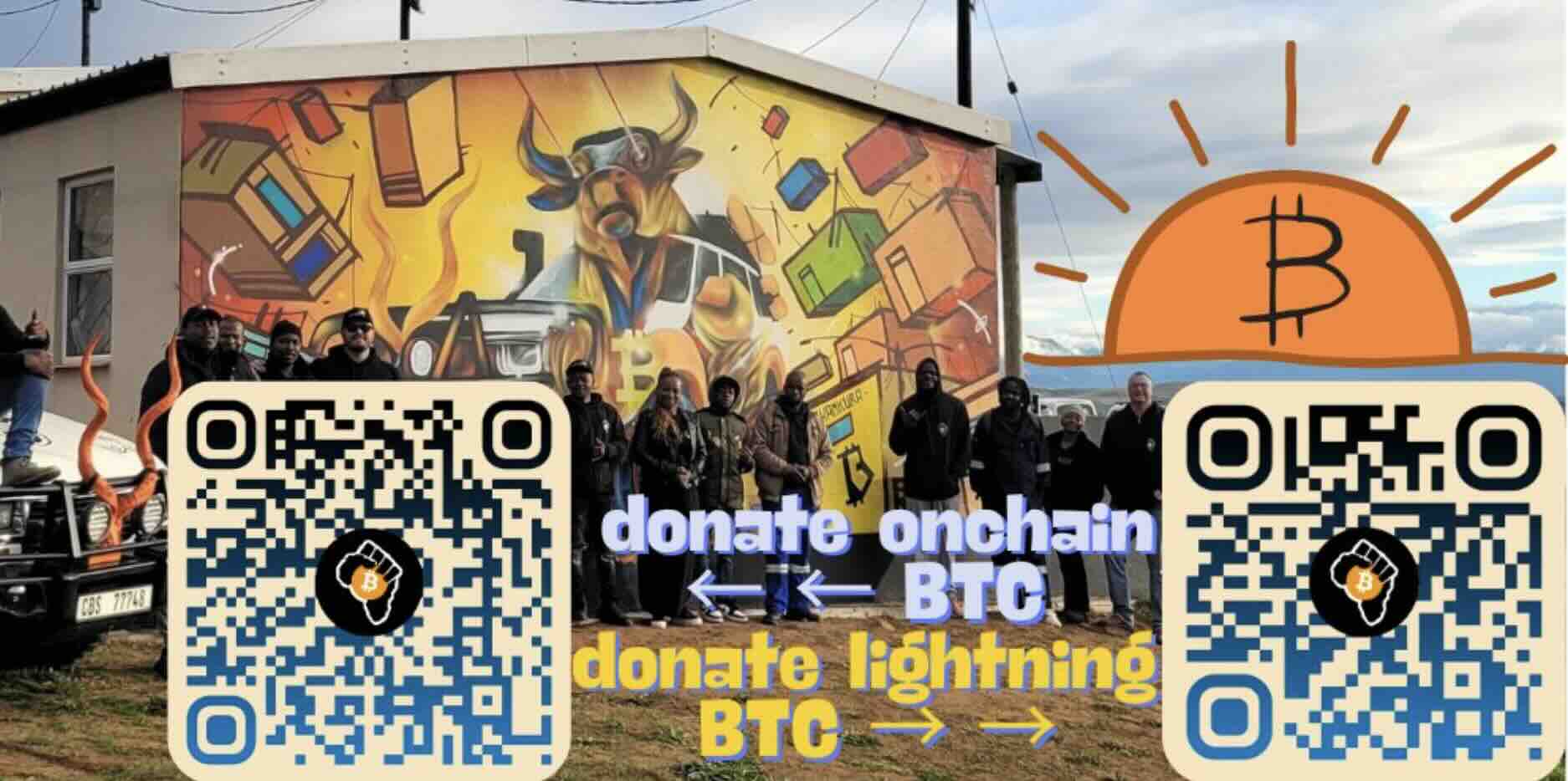
Bitcoin Ekasi is accepting donations to expand its programs. For those interested in supporting the project or learning more, visit their social channels, the organization operates as a nonprofit with full transparency about how funds are used.
In a world obsessed with Bitcoin's price charts and regulatory battles, Bitcoin Ekasi reminds us what this technology was always meant to do: give people control over their own financial futures, no matter where they're born or how much money they start with.
